








Carrying excess body fat has long been linked to certain medical complications, cancer being among the most consistent. Decades of research point to obesity as a well-established risk factor, and a new study suggests its impact may be even greater than previously thought.
So, how much does obesity actually increase one’s risk of cancer? Published in Cancer Communications, this study found that excess body fat may account for more than 10% of all cancers, well above previous estimates of 2% to 8%. Here’s what the latest research found and what it could mean for your health.

How obesity and cancer risk are related
New research suggests that excess body fat may contribute to more than 1 in 10 cancer cases. In this study, researchers analyzed health data from more than 458,000 adults enrolled in the UK Biobank, a large-scale biomedical database, and followed them for nearly 12 years. During this time, more than 50,000 participants developed cancer.
Earlier studies put the majority of cancers linked to excess weight at roughly 2% to 8%. Why those estimates ran low, the new study suggests that this was due in part to many of the studies relying primarily on body mass index (BMI).
BMI doesn’t distinguish fat from muscle or show where fat is stored in the body, making it an unreliable gauge for cancer risk.
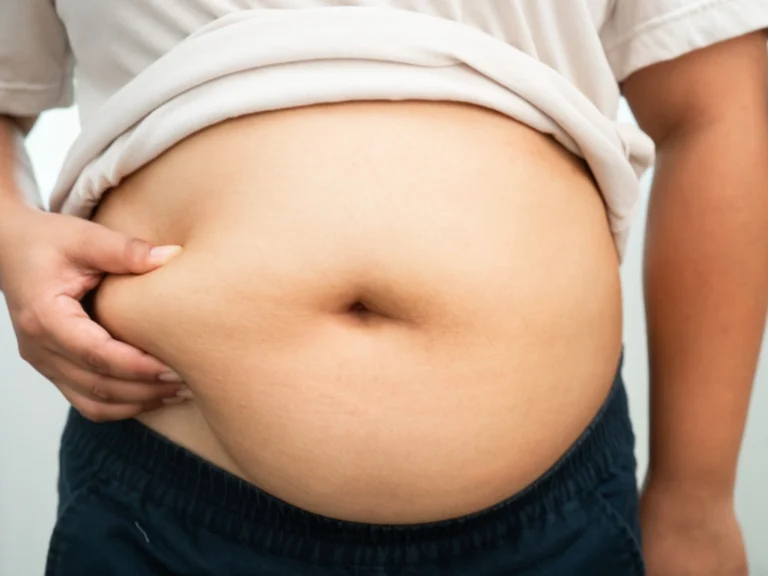
Instead, this new study found that waist circumference and waist-to-hip ratio — both measures of central adiposity — were stronger predictors than BMI alone. These measurements better capture visceral fat, the fat stored around internal organs, that is closely tied to metabolic dysfunction.
The team behind the new study also adjusted for prediagnostic weight loss, a pattern in which an undiagnosed cancer causes weight loss before diagnosis, which can obscure the true link between body weight and cancer in long-term studies. After accounting for this and other methodological factors, they estimated that excess body fat may contribute to more than 10% of cancers.
Findings like these can understandably feel alarming, but registered dietitians caution against overreacting to them. “Consistency is going to be more important than making drastic changes,” says Haleigh Mann, MS, RDN, LDN of Health Loft.
“When confronted with data like this, it’s natural to be concerned and to want to make big changes quickly. However, the most sustainable and long-lasting changes are made by meeting yourself where you’re at and gradually changing habits over time.” She likens it to getting 1% better each day rather than trying to become 50% better overnight, and points out that when it comes to reducing body fat, even five minutes of movement is better than none.
Does obesity cause cancer?
Current evidence suggests that maintaining a healthy weight can help lower the risk of several cancers. Organizations including the American Cancer Society and Cancer Research UK recommend it as part of cancer prevention, and research has consistently linked being overweight and obesity to at least 13 cancers, including postmenopausal breast cancer, colorectal cancer, endometrial cancer, and kidney cancer. These obesity-related cancers account for a substantial portion of preventable cancer cases worldwide.
Scientists believe that excess body fat raises cancer risk through several biological pathways. Fat tissue is metabolically active, releasing hormones and inflammatory signals throughout the body. Excess fat can:
- Increase chronic inflammation
- Raise levels of growth-promoting hormones such as insulin and insulin-like growth factor (IGF-1)
- Increase estrogen production after menopause
Together, these changes may encourage abnormal cells to grow and divide more frequently.
Why belly fat may matter more than BMI
The part of the body in which body fat is stored may be just as important as how much body fat a person has. This study found that waist circumference and waist-to-hip ratio predicted cancer risk more reliably than BMI.
BMI remains a useful screening tool, but it has limitations. It estimates weight relative to height but doesn’t account for muscle mass, body composition, or fat distribution.
As Mann puts it, “BMI is a helpful metric of health but isn’t entirely accurate in predicting health status. Because BMI doesn’t take into account muscle mass or fat distribution, it should not be used as the only metric for health. Having a lower BMI does not automatically mean someone is healthy, and having a higher BMI doesn’t automatically mean someone is unhealthy. It’s just one piece of the puzzle.”
Abdominal fat, particularly the visceral fat surrounding internal organs, is thought to be more metabolically active than fat stored elsewhere in the body. It produces hormones and inflammatory compounds that may drive cancer development, which could explain why waist-focused measurements predicted risk better in this study than BMI alone.
Other research similarly suggests that waist-to-hip ratio may forecast future chronic disease better than BMI alone. Mann further recommends weighing waist circumference alongside other health markers, such as lab values, sleep quality, and stress levels.
What can you do to help lower your cancer risk?
Weight is only one of many factors that shape cancer risk. Age, genetics, family history, and environmental exposures all play a role, and carrying excess weight doesn’t mean someone will definitely develop cancer.
Rather than chasing rapid weight loss, experts recommend building sustainable habits that support overall health. These methods include:
- Eating a balanced diet rich in fruits, vegetables, whole grains, and legumes
- Staying physically active
- Limiting alcohol
- Avoiding tobacco
- Keeping up with recommended cancer screenings
For people who are overweight or obese, even modest weight loss can improve overall health and lower the risk of conditions such as type 2 diabetes and heart disease. While researchers continue studying how intentional weight loss affects cancer risk specifically, maintaining a healthy weight remains an important part of long-term disease prevention.
When it comes to putting these habits into practice, Mann suggests starting with movement you actually enjoy, whether that’s biking, swimming, an exercise class, or simply walking. “Some movement is always better than no movement, so start small and gradually increase duration over time,” she says. “It’s not a bad thing if you get bored or tired of one particular workout, and this doesn’t mean you lack willpower.”
Mixing things up, she notes, keeps you mentally engaged while working a wider variety of muscle groups. The same philosophy applies to diet: there’s no need to force down foods you dislike in the name of health. “Don’t eat Brussels sprouts if you don’t like Brussels sprouts,” she says. “Find a palatable fibrous food that you like, baby carrots or apples, for example, and increase variety from there. Some fiber is always better than no fiber.”
Prevent complications through expert-supported weight management
While current research strengthens the evidence linking excess body fat to a higher risk of developing several cancers, whether obesity itself directly causes cancer isn’t plainly black or white.
Genetics, family history, environmental exposures, and everyday lifestyle habits all shape a person’s risk of developing cancer too, and often as much as weight does.
Prevention matters more than reacting after the fact, and the right nutrition guidance can help keep disease at bay. Cancer risk factors, nutrition needs, and weight status are deeply individual, and generic advice rarely accounts for someone’s full health picture.
At Health Loft, our registered dietitians specialize in weight loss and cancer-related nutrition, and can help build realistic, sustainable plans tailored to your daily routine, food preferences, medical history, and fitness goals, instead of bringing generalized advice to the table.
When needed, we also collaborate with your other healthcare providers to ensure coordinated, comprehensive care, especially when medical conditions, injuries, or other factors make the process of losing weight more complex.
Book a consultation with a Health Loft dietitian to get personalized, evidence-based support and start building healthy habits that can lower your risk of illness.
This article was reviewed by Haleigh Mann, MS, RDN, LDN. It is intended for informational purposes only and does not replace personalized nutritional advice.