









Coffee has earned a reputation as both a guilty pleasure and a potential health hero. Some people swear by it for keeping them sharp, and many studies have linked moderate coffee consumption to a lower risk of chronic diseases and a longer lifespan. Still, others endure palpitations, acid reflux, and even digestive issues just to enjoy its bright, bitter flavors.
These usual effects aren’t the only ones to watch out for, as recent findings reveal that the well-loved drink may also be contributing to wrinkles and sped-up biological aging. Does coffee actually age you? According to researchers, the answer may depend on how your coffee is brewed.

How does coffee affect aging?
A 2026 observational study of more than 49,000 adults from the UK (United Kingdom) Biobank, the world’s largest health database to date, suggests that coffee may, in fact, affect aging — specifically biological age.
Biological age refers to how well the body’s cells and systems are functioning. It’s important to note that it differs from chronological age, which refers to the exact number of years a person has been alive.
Findings from the study revealed an interesting pattern regarding coffee’s effect on aging. People who regularly drank filtered coffee tended to have more favorable biological aging markers. Meanwhile, those who drank larger amounts of instant coffee showed slightly less favorable aging markers.
These trends were consistent across several measures of biological aging, but researchers assured that the differences were relatively small when taken at an individual level. An even more important caveat is that this association remains observational, which means it cannot prove that one type of coffee directly causes slower or faster aging.
The coffee brewing method may matter
Why does filtered coffee impact aging differently than instant coffee? To answer this, researchers ran additional association analyses against three specific biological age measures: PhenoAge, KDM-BA Accel, and telomere length.
Across these markers, factors linked to inflammation (GlycA), kidney function (cystatin C), and metabolism (basal metabolic rate) partly explained the relationship between filtered coffee and lower biological age acceleration.
For instant coffee, on the other hand, inflammation appeared to account for a substantial portion of its association with higher biological age acceleration.
Notably, both of these associations were observed specifically among people drinking three or more cups a day of their respective coffee type — the effects weren’t necessarily seen at lower, more moderate intakes.
As with the broader findings, these results show statistical associations rather than cause-and-effect, so it’s not possible to conclude that either coffee type directly changes these biological processes.
Does caffeine play a role in aging?
A separate in vitro study, also from 2026, from Texas A&M (Agricultural and Mechanical) University offers another piece of the puzzle connecting coffee and aging. In this study, researchers found that several naturally occurring plant compounds in coffee, not caffeine itself, can activate a receptor called NR4A1.
NR4A1 helps regulate inflammation, stress responses, metabolism, and tissue repair, all of which play important roles in healthy aging. In laboratory models, compounds such as caffeic acid and other polyphenols appeared to activate this receptor, helping reduce cellular stress and damage. Interestingly, when researchers removed the receptor, those protective effects disappeared.
The findings also help explain why both regular and decaffeinated coffee have often been associated with health benefits.
While caffeine is the best-known ingredient in coffee, many of its beneficial effects may come from the beverage’s rich mix of plant compounds: chlorogenic acid, trigonelline, diterpenes, melanoidins, and flavonoids among them.
“You can find chlorogenic acid in green tea, some fruits like pears and apples, vegetables like artichoke and eggplant, herbs and spices like bay leaves and mustard, and seeds like sunflower seeds,” says Katie Whitson, a registered dietitian from Health Loft.
The other compounds show up mainly in tea, cocoa and dark chocolate, and other coffee-related sources, with flavonoids being the exception, as they are found broadly across fruits and vegetables. Flavonoids are what give produce its vibrant color, so think berries, citrus fruits, kale, and even red wine.
Still, researchers emphasize that coffee is incredibly complex, containing hundreds of naturally occurring compounds that likely work through multiple biological pathways. NR4A1 may be one important factor to pay close attention to, but it most certainly doesn’t tell the whole story.
Should you stop drinking instant coffee?
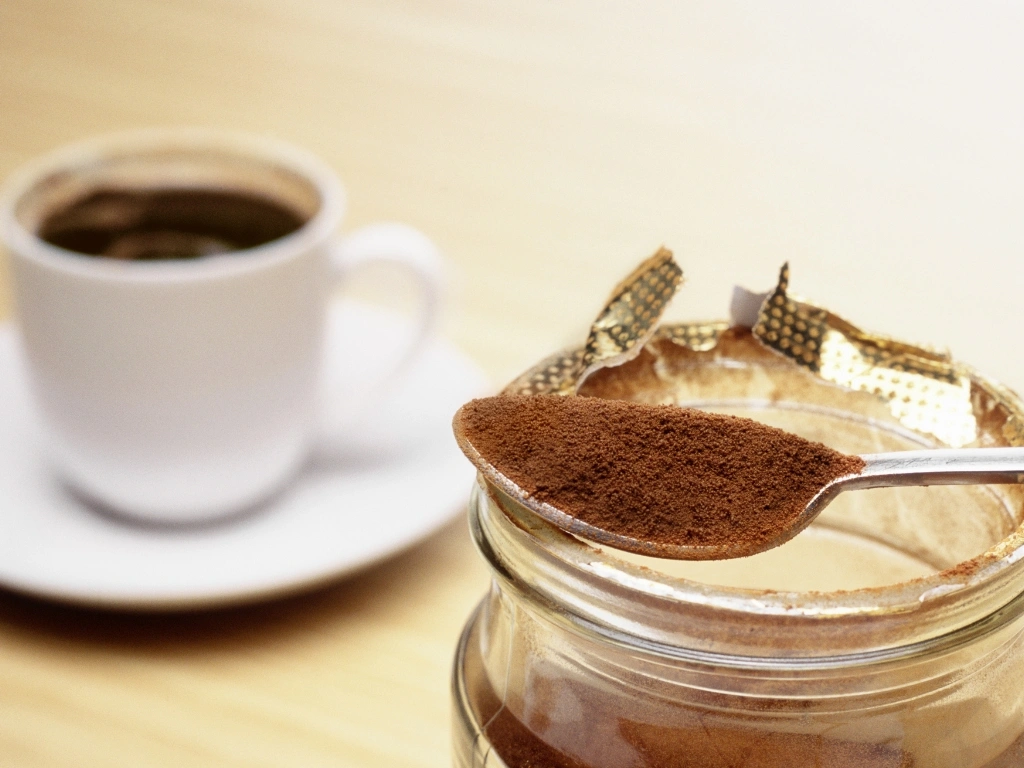
For most people, the answer is no, at least not based on this study alone, so there’s no need to toss your instant coffee just yet.
“I don’t believe the evidence is strong enough to encourage you to shift from instant to filtered,” Whitson says. “It depends on your overall taste preference and whether you’d prefer to shift your lifestyle to include home-brewed coffee.”
She adds that headlines don’t always capture that nuance, and it’s worth reading them with a critical eye. “A lot of headlines may overstate the results, or downplay them. Nutrition is a dynamic, ever-changing field, and as more research comes out, it’s important to stay curious.”
When a study like this one gets covered, she recommends asking whether the coverage is transparent about both its strengths and its weaknesses. In this case, the biggest limitation is that the study is observational rather than a randomized controlled trial where variables are tightly controlled, meaning other factors could be influencing the results.
Her advice: look at the total body of research available, or bring your questions to a dietitian, before changing your habits based on a single study.
How to keep coffee consumption healthy, according to a dietitian
Rather than fixating on brew method, she focuses her clients’ attention on the fundamentals: getting adequate protein, fiber, and calories; daily movement they actually enjoy; healthy stress-management routines (or a therapist to help build one); enough water; and quality sleep. In Whitson’s view, these all play a bigger role in overall health than which type of coffee someone prefers.
The one concrete tweak she does recommend is timing: avoiding caffeinated beverages within six hours of bedtime, since caffeine late in the day can disrupt circadian rhythm.
While the new findings are promising because they help researchers better understand coffee’s relationship with aging, they ultimately aren’t strong enough to change dietary guidelines. If you enjoy filtered coffee, these results may be reassuring. If you prefer instant coffee, there’s still no need to panic. Future research will help clarify whether the differences seen in this study translate into meaningful long-term health outcomes.
Nutrition advice works best when it’s tailored to you
So, does coffee age you? Current evidence suggests it’s not coffee itself but potentially the type of coffee that may influence biological aging markers, and even then, the evidence is still emerging. Although filtered coffee showed more favorable associations than instant coffee in a recent study, experts stress that these findings aren’t final and shouldn’t be a reason to completely overhaul your entire viewpoint on coffee.
At the end of the day, healthy aging is built through consistent daily habits, with nutrition being just one aspect of a broader picture. To learn how you can tailor these habits to improve your individual nutrition, consult a registered dietitian who can provide advice that goes beyond headlines.
At Health Loft, our experts can work closely with you to create personalized nutrition plans that better align with what you need, helping you build lifestyle choices that actively support healthy aging and wellness you can sustain. Connect with a Health Loft dietitian today.
This article was reviewed by Katie Whitson, MS, RD, LD. It is intended for informational purposes only and does not replace personalized nutritional advice.