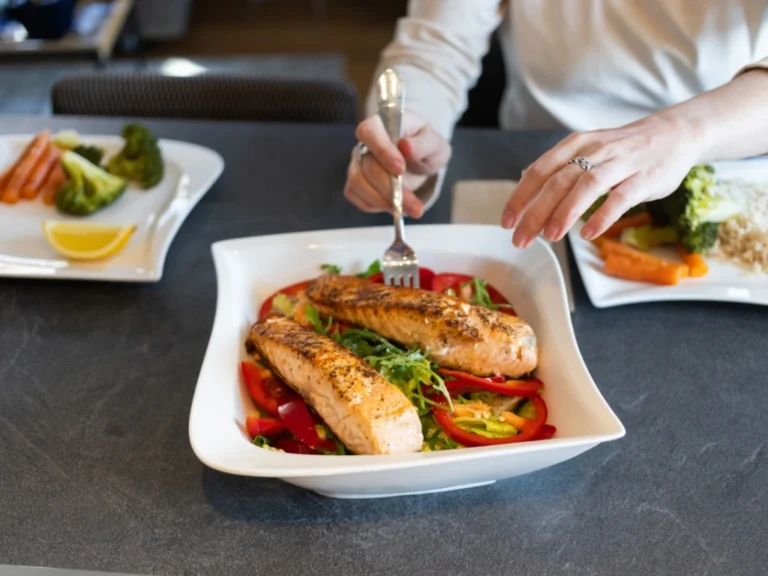









If you’re looking to eat more vegetables and whole grains without giving up the savory punch that seafood brings to your plate, a sweet spot to aim for is the pescatarian diet.
It isn’t as strict as a vegetarian diet, not as meat-heavy as the standard American meal, and turns out to be one of the easiest “diets” to actually stick with because it doesn’t rely on being overly restrictive.
If you’ve been curious but didn’t know where to start, this guide gives you a full week of pescatarian meal plan ideas so you can start preparing satisfying meals that align with your health goals.

What is a pescatarian diet?
A pescatarian diet is an eating pattern that includes fish and other seafood, but excludes meat from land animals and birds. This diet is distinct from a vegetarian diet, which avoids all animal flesh.
Many individuals choose this way of eating for all kinds of reasons, including potential health benefits of cutting down on red and processed meat, protecting the environment and animal welfare, or just having a preference for seafood over meat and poultry.
An honest caveat worth keeping in mind, however, is that choosing fish over a burger isn’t automatically healthier. The overall balance and quality of the foods you’re eating will still be doing the heavy lifting.
Key benefits of going pescatarian
A well-planned pescatarian diet can support your heart, sharpen your nutrient intake, and lower your risk for a handful of chronic diseases.
Better heart and brain health
One of the biggest advantages of a pescatarian diet is eating more fish rich in omega-3 fatty acids, the healthy fats known for supporting heart and blood vessel health. In fact, the American Heart Association recommends eating fish such as salmon, sardines, and mackerel at least twice a week.
Research also suggests that regular fish eaters may also get some protection for their brain, including a lower risk of stroke and age-related cognitive decline.
More nutritional value
Trading red and processed meat for seafood can increase your intake of high-quality protein, vitamin D, vitamin B12, iron, selenium, and zinc.
Most pescatarian meal plans naturally include more vegetables, fruits, legumes, and whole grains, adding fiber, nutrients, and other beneficial plant compounds.
Reduced disease risk
Large population studies have even linked this eating pattern to a lower overall risk of cancer and a more favorable cardiovascular risk profile compared to meat-heavy diets.
Weight management
For many people, weight loss on a pescatarian diet is an added benefit because meals tend to be higher in protein and fiber, which naturally keep you fuller for longer. Still, this eating pattern works best and is most sustainable only if you build meals around whole, minimally processed foods and keep them balanced.
What foods can you eat on a pescatarian diet?
The beauty of a pescatarian diet is how much room it leaves you to customize what’s on your plate. Extending a plant-forward eating pattern to include seafood, as well as optional eggs and dairy, makes for a flexible diet that’s easy to follow long-term and entails fewer restrictions than many people expect.
Foods to include in a pescatarian meal plan
- Fish, such as salmon, tuna, cod, and sardines
- Shellfish, including shrimp, crab, lobster, clams, mussels, and oysters
- Seaweed and/or marine algae
- Roe (fish eggs)
- Tofu
- Vegetarian/plant-based “mock” meats
- Fruits and vegetables
- Whole grains
- Nuts and seeds
- Plant-based oils
- Eggs (if preferred)
- Dairy products (if preferred)
Foods to avoid in a pescatarian meal plan
- Red meat (beef, pork, lamb, veal)
- Poultry (chicken, duck, and turkey)
- Processed meats (bacon, deli meats, hot dogs, etc.)
- Any other meats
7-day pescatarian meal plan for beginners
If you’re ready to get started, this pescatarian meal plan for beginners offers balanced, easy-to-prepare meals built around seafood, vegetables, whole grains, and other pescatarian-approved ingredients. Feel free to swap in whatever fish, veggies, or grains that you have on hand or prefer.
Day 1
- Breakfast: Spinach and feta eggs Florentine
- Lunch: Harissa-spiced cod with brown rice
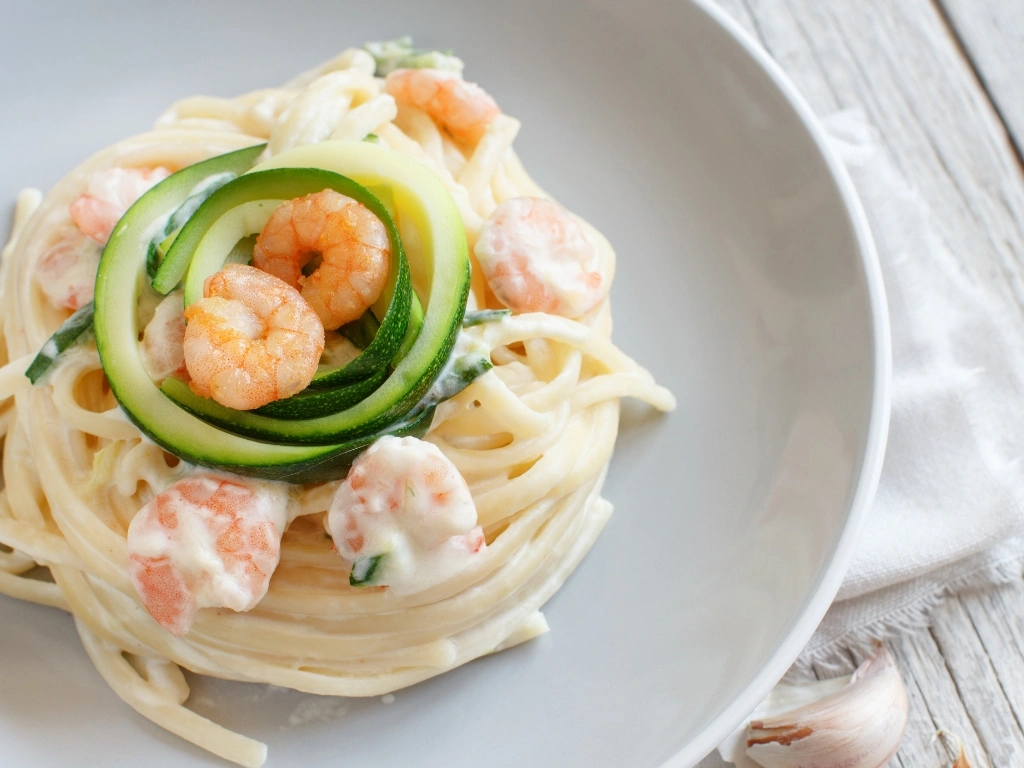
- Dinner: Creamy shrimp and zucchini noodle pasta
- Snack: Cookie-stuffed puff pastry twists
Day 2
- Breakfast: Grilled halloumi, mushroom, and tomato egg skillet
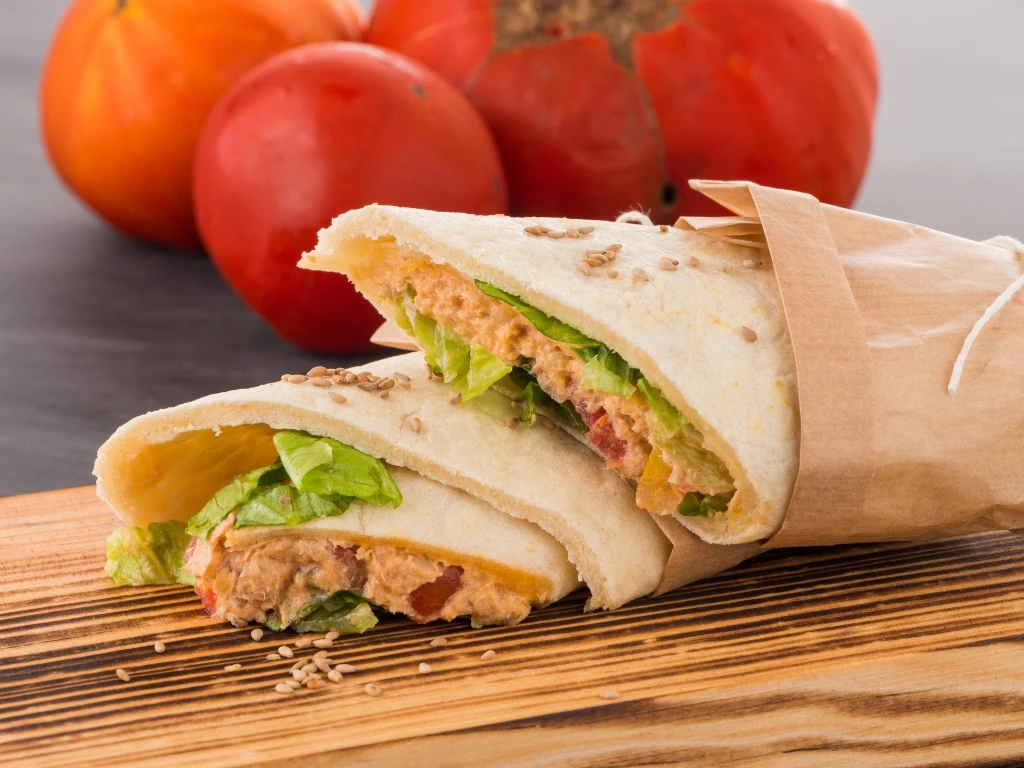
- Lunch: Tuna salad wraps with lettuce and tomato
- Dinner: Herb-crusted baked tilapia with roasted root vegetables
- Snack: Mixed berry and flaxseed protein smoothie

Day 3
- Breakfast: Smoked salmon and dill omelet
- Lunch: Grilled vegetables and hummus on flatbread
- Dinner: Curry salmon with rice and roasted veggies
- Snack: Raspberry almond muffins

Day 4
- Breakfast: Smoked mackerel breakfast bowl with sautéed kale and poached eggs
- Lunch: Spicy crab and avocado salad boats
- Dinner: Teriyaki salmon soft tacos with sesame slaw
- Snack: Banana bread with walnuts
Day 5
- Breakfast: Blueberry ricotta oat waffles
- Lunch: One-pot Mediterranean tuna with orzo
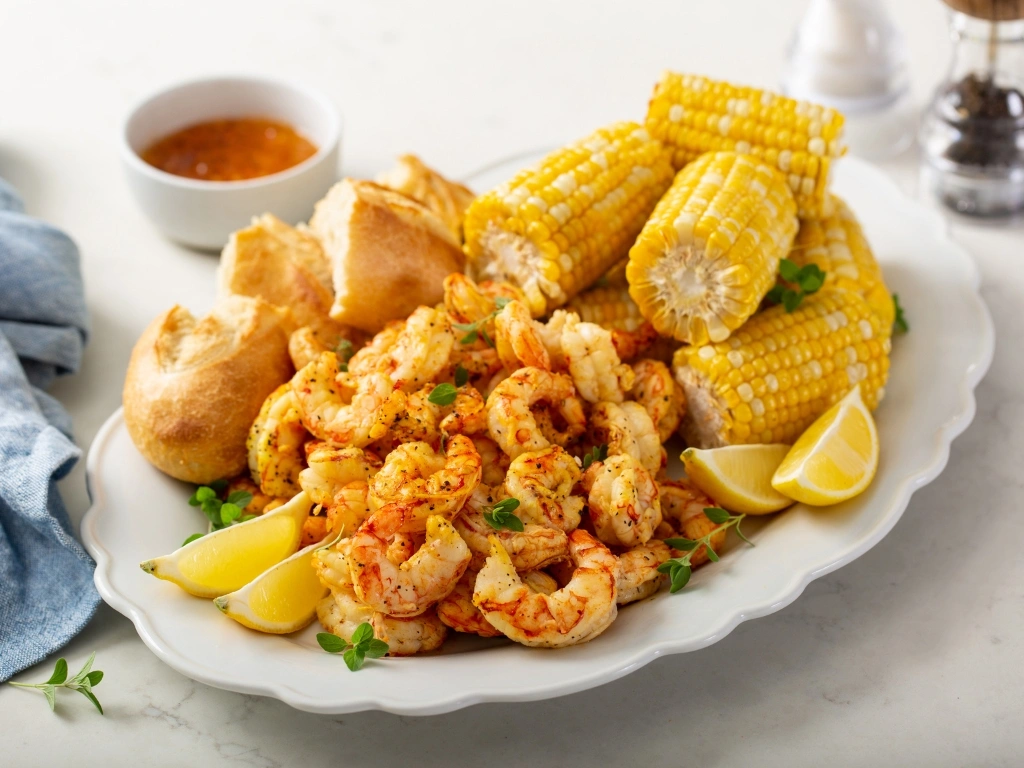
- Dinner: Sheet-pan Cajun shrimp and corn boil
- Snack: Blackberry hand pies
Day 6
- Breakfast: Sun-dried tomato and goat cheese frittata
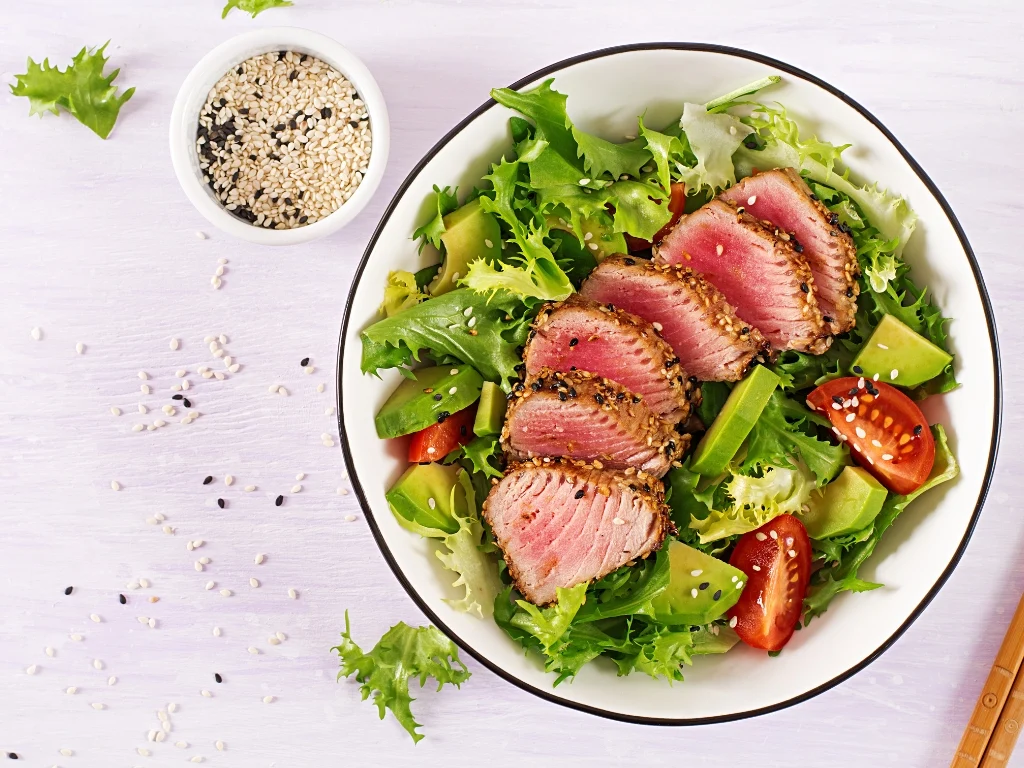
- Lunch: Sesame-crusted ahi tuna over a tomato and greens salad
- Dinner: Crispy Baja-style fish tacos with chipotle crema
- Snack: Mochi donuts
Day 7
- Breakfast: Tomatillo green shakshouka
- Lunch: Crispy tofu hash with sweet potatoes
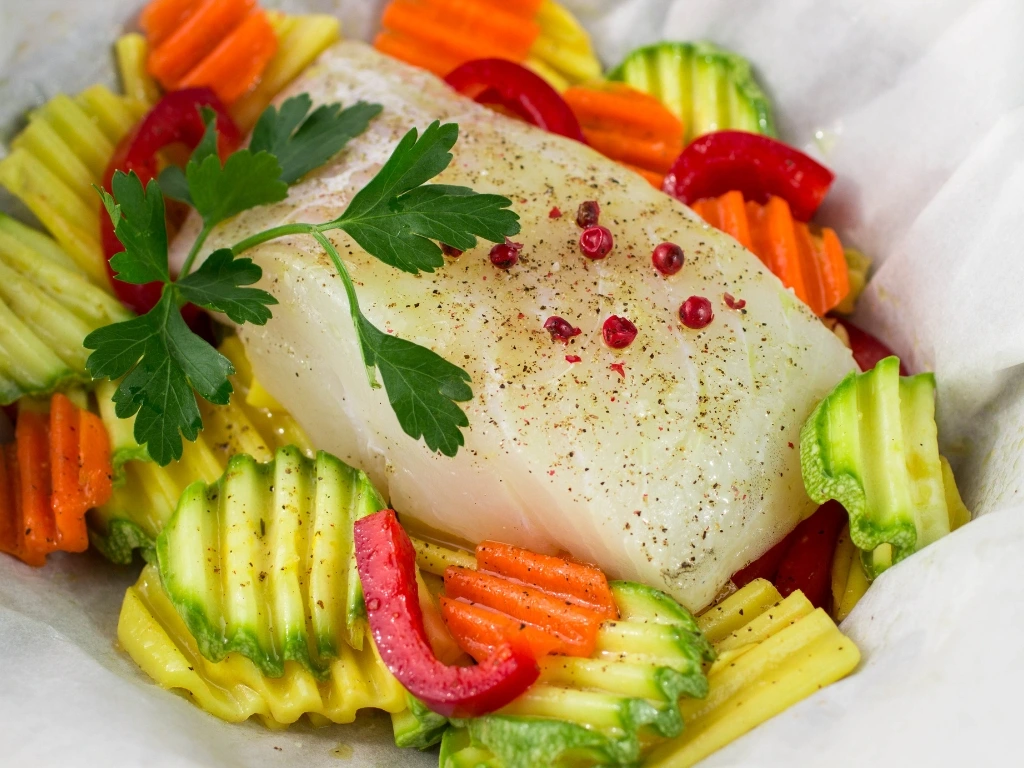
- Dinner: White wine and fennel-poached halibut
- Snack: Strawberries and cream brioche sandwich
Considerations to keep in mind when going pescatarian
No eating pattern comes without its fine print. While a pescatarian diet offers many health benefits, it’s important to be aware of a few potential drawbacks so that you can make informed food choices.
Watch the mercury content in certain fish
Larger and longer-lived predatory fish, such as swordfish, shark, king mackerel, and marlin, tend to carry higher mercury levels. If you’re pregnant, breastfeeding, or feeding young kids, stick to lower-mercury options like salmon, sardines, cod, shrimp, crab, and scallops.
A balanced diet is still essential
Seafood isn’t a magic bullet. Yes, it provides important nutrients such as protein, B12, omega-3s, iron, and zinc, but no single food group covers everything. Keep the vegetables, fruits, whole grains, legumes, nuts, and seeds coming as well in order to build a well-rounded diet.
Sustainability matters
Not all seafood is caught or farmed the same way. When you can, choose sustainably sourced fish and shellfish from suppliers who take this form of fishing seriously. Where you choose to spend your money can ripple out to making our oceans and fisheries cleaner.
Your calorie needs may differ
Many pescatarian meal plans tend to be naturally filling and lighter in calories, which is great if weight loss is the goal — but less great if you’re trying to gain weight or have higher energy needs. In that case, bigger portions or a chat with a registered dietitian can help you meet your individualized nutritional needs.
Make healthier eating patterns stick with guidance from Health Loft
Embracing a pescatarian lifestyle can be a wonderful way to support your health. By building your plate around colorful, whole foods and protein-packed seafood, this eating pattern stops feeling like a “diet” and starts feeling doable for the long-run.
However, even the best eating pattern works better with the right support behind it. Everyone’s body, schedule, and goals are different. What counts as balanced for one person might fall short for another, especially if you’re managing a health condition, food allergy, or specific nutrition target like muscle gain, blood sugar control, or heart health.
To find a plan that actually fits your life, individual preferences, and health metric targets, consider working with a registered dietitian. At Health Loft, our experts work with you one-on-one to translate evidence-based science into a pescatarian (or any) eating plan that’s realistic to follow — one that flexes around your budget, cooking skills, food preferences, and science-backed strategies that make healthier habits actually stick.
Ready to make the shift with expert support in your corner? Connect with a Health Loft dietitian to build an eating plan designed with you in mind.
This article was reviewed by Haleigh Mann, MS, RDN, LDN. It is intended for informational purposes only and does not replace personalized nutritional advice.