









For people who want or need to lose weight, the first thing that comes to mind — and often the first suggestion they get from experts — is to work out.
Physical activity can lead to weight loss when done properly and consistently, offering several health benefits in addition to fat loss. However, it’s not the only proven way to shed a few pounds. In fact, healthy weight loss may be attained without having to overly rely on exercise.
If you are unable to work out regularly due to a busy schedule, injury, chronic health condition, or other life circumstances, this guide explains how you can lose weight without exercise.

Is it possible to lose weight effectively without exercise?
Yes, it is possible to lose weight effectively without exercise, as long as you consistently maintain a calorie deficit.
To learn how you can lose weight without exercise, you must first understand what a calorie deficit refers to: it simply means your body is burning more calories than you’re consuming. When this happens, your body uses stored fat for energy, leading to weight loss over time.
Exercise does play a significant role in healthy weight loss, supporting overall health, improving mood and energy, and helping maintain muscle mass. However, it isn’t the primary driver for weight loss.
Many experts agree that diet, not exercise, has the bigger influence here. This is because it’s often easier to reduce calorie intake than to burn a large amount of calories through exercise alone.
Sustaining the pounds you lose also relies heavily on your nutritional habits, portion control, and daily non-exercise movement.
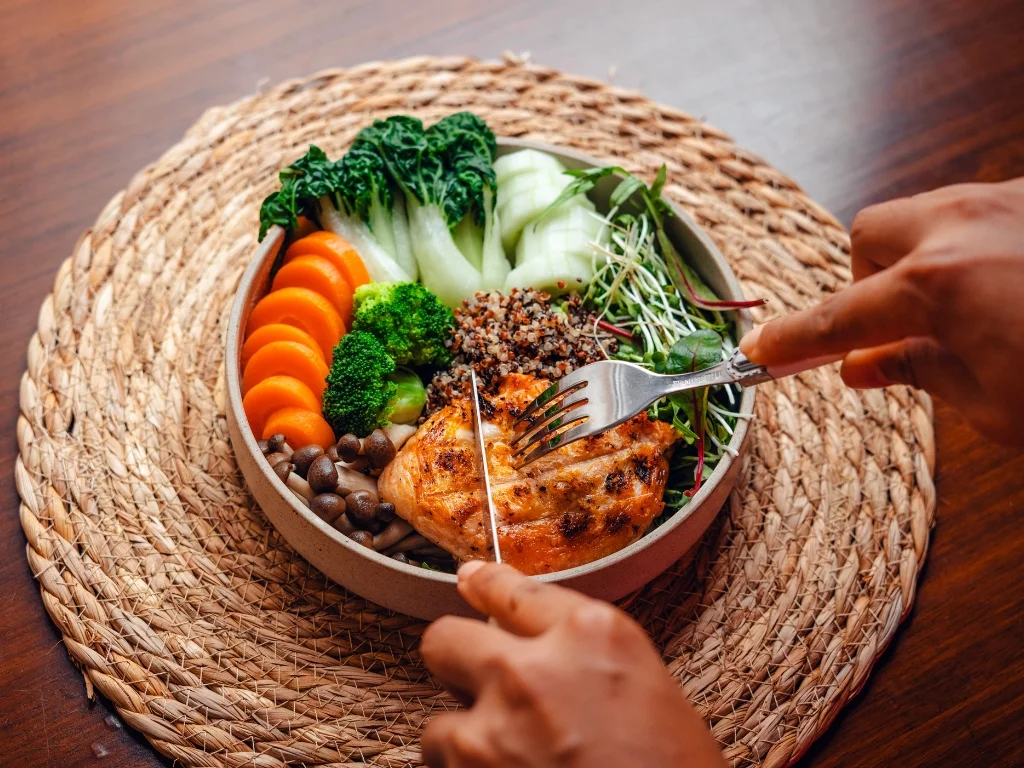
Eating habits that make weight loss easier
Losing weight without working out doesn’t require a restrictive diet. It’s possible to build dietary habits that naturally help you to consume fewer calories while staying satisfied, nourished, and supportive of your overall health. Start with the following:
Prioritize high-fiber foods
Fiber-rich foods can help you to stay fuller for longer, making it easier to avoid unnecessary snacking and overeating. They slow digestion, which helps to regulate your appetite throughout the day. Besides supporting weight management, a high-fiber diet also promotes healthy digestion and nourishes beneficial gut bacteria linked to supporting overall health.
Research also shows that diets high in fiber are associated with a lower risk of obesity and chronic diseases, while populations consuming more fiber tend to have healthier gut microbiomes than those eating highly processed diets.
Choose protein with every meal
Protein is another nutrient that promotes fullness. Studies have found that higher-protein diets can help support weight management by reducing hunger and preserving muscle mass during weight loss.
“Protein is actually considered to be the most satiating macronutrient,” says Haleigh Mann, MS, RDN, LDN from Health Loft. “Because it acts on our hunger and fullness hormones. This is why adding protein to meals and snacks can make them more satisfying and keep you full for longer.”
Including a source of protein with each meal can make it easier to manage cravings throughout the day. Good choices you can easily add to your plate are lean poultry, fish, eggs, Greek yogurt, cottage cheese, beans, lentils, tofu, and nuts.
Avoid skipping meals
Skipping meals may seem like a quick way to cut calories, but it can backfire by increasing hunger later in the day. A large cohort study found that regularly skipping dinner was associated with a greater risk of weight gain and being overweight over time.
Rather than going long periods without eating, aim for regular, balanced meals that help keep your appetite steady.

Stay hydrated throughout the day
Drinking enough water is a simple habit that does wonders for weight management. A review from 2025 found that drinking about 500 mL of water before meals can reduce hunger and calorie intake, particularly among middle-aged and older adults.
The same review also reported that replacing sugar-sweetened beverages with water was associated with modest but meaningful reductions in body weight over time.
To help you stay well-hydrated, it’s best to keep a reusable water bottle nearby and make water your default beverage whenever possible.
Limit highly processed foods
Ultra-processed foods are often high in calories while being low in fiber and nutrients. A randomized crossover trial from 2024 found that participants ate over 800 additional calories per day and gained significantly more weight while consuming ultra-processed foods compared with nutritionally matched minimally processed meals.
Similarly, another 2025 study found that people gained more body fat on ultra-processed diets even when calories and macronutrients were controlled, suggesting that the degree of food processing itself may contribute to additional weight gain.
Whenever possible, choose foods that are minimally processed, such as fresh produce, whole grains, legumes, lean proteins, and healthy fats.
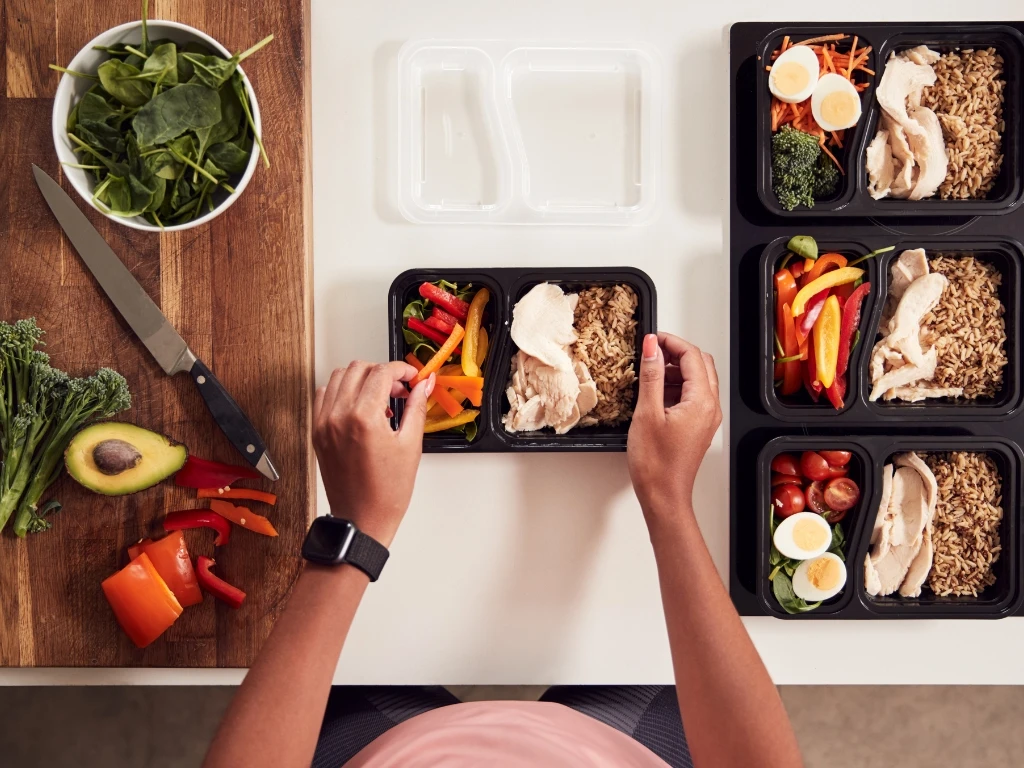
Plan meals ahead
Having a plan for your meals reduces the temptation to rely on convenience foods or last-minute takeout meals. One behavioral weight loss study found that participants who consistently planned their meals in advance lost more weight than those who planned less frequently, highlighting meal planning as a practical habit for long-term success for weight management.
Watch portion sizes
Healthy eating isn’t just about cutting down on certain foods or strictly measuring every single bite. In order to manage your weight through diet, you have to be more aware of portion sizes and serve yourself reasonable amounts that match your hunger levels.
Pairing sensible portions with plenty of vegetables, fiber, and protein allows you to enjoy satisfying meals while maintaining the calorie deficit you need for sustainable weight loss, without making eating feel restrictive.
Practice mindful eating
Research has shown that slowing down and paying more attention to your food while eating can improve awareness of hunger and fullness cues, reduce emotional eating, and support weight and fat loss in adults with obesity.
“Mindful eating” can be practiced through simple habits like eating without distractions, chewing slowly, and checking in with your hunger.
“It can be helpful to practice gratitude and grounding in order to slow down meal pacing and eat more mindfully,” Mann says. “The next time you sit down for a meal, think of all of the steps it took to get the food from the ground to your plate. Notice the different flavors and textures that come together to make up the meal that’s going to provide you energy for the rest of the day.”

Other lifestyle changes to support healthy weight loss without exercise
Practicing a healthy lifestyle is not just about how and what you eat. Certain changes to your day-to-day behavior can also help you maintain a calorie deficit and lose weight even without exercise:
Practice regular, non-exercise movement
Physical activity doesn’t have to include only intentional exercise. It’s still necessary and beneficial to get daily movement in, even if it doesn’t entail pumping iron in the gym or participating in intense cardio sessions.
Non-exercise activity thermogenesis (NEAT) is the energy your body burns for all activities that aren’t sleeping, eating, or formal exercise. NEAT creates a sustainable, daily calorie deficit that makes it easier to maintain weight. It also helps improve metabolic and cardiovascular health.
Simple ways to incorporate more NEAT into your routine are:
- Standing up and walking around the room when you’re on the phone
- Doing household chores manually instead of using appliances (e.g., washing dishes by hand)
- Walking to a store instead of driving
- Packing groceries in smaller bags so you have to walk back and forth multiple times
Manage everyday stress
Weight loss is much more challenging with chronic stress. Cortisol, the stress hormone, is also linked to increased appetite, cravings for sugary and high-fat foods, and abdominal fat storage. It has also been found to disrupt sleep, creating an unhelpful cycle that makes healthy habits more difficult to maintain.
Techniques such as deep breathing, meditation, spending time outdoors, journaling, or talking with a trusted friend can help reduce or manage everyday stress.
Prioritize quality sleep
Getting enough quality sleep is among the most overlooked habits that contribute to weight loss. Most adults need seven to nine hours of sleep each night. Research consistently shows that sleeping six hours or less may be associated with a higher body weight and greater risk of obesity.
Sleep also affects the hormones that regulate hunger. Too little sleep lowers leptin, the hormone that signals fullness, while simultaneously increasing ghrelin, the hormone that stimulates appetite. As a result, you may feel hungrier, experience stronger cravings for high-calorie foods, and have less energy to make healthy choices the next day.
Track progress in realistic ways
Weight loss is not solely measured by the number on the scale. Besides monitoring your weight, tracking your progress based on your sleep, daily habits, waist measurements, or how your clothes fit can help you stay motivated and identify what’s working.
Do popular diets work for weight loss?
When you’re keen to learn how to lose weight without going to the gym, it’s understandable to be tempted by fad diets that promise fast results. They may seem like the laziest ways to burn fat, but unfortunately, research has shown that weight loss achieved through these approaches is rarely sustainable.
More often than not, these quick methods of weight loss leave people feeling deprived, so the cravings increase and sticking with healthy behaviors becomes much harder. Once the diet ends, you risk falling back to old eating patterns, causing the lost weight to quickly return.
While fad diets like the keto diet, Atkins diet, Paleo diet, and detox cleanses may have their own roles and benefits, many of these eliminate entire food groups without a medical reason or rely on unrealistic restrictions, so it’s unsurprising that most people cannot adhere to them long-term.

Should you forgo exercise altogether when losing weight?
Although exercise is not strictly needed to lose weight, you should not forgo it altogether.
When you lose weight through diet alone, a significant portion of the weight lost can be lean muscle mass. Incorporating strength training ensures that the weight you lose is primarily fat, not muscle. Preserving muscle also helps to maintain your metabolism and prevents your body from burning fewer calories as you lose fat.
Most importantly, exercising improves cardiovascular health, lowers the risk of diseases, and boosts your mood and energy. There’s no need to spend hours in the gym to see these benefits. At least 150 minutes of moderate-intensity aerobic activity per week and/or strength training at least two days a week is more than enough, as long as done consistently.
For the best long-term results, it’s advisable to combine healthy eating with regular physical activity whenever possible.
Unlock healthy weight loss with a Health Loft dietitian
Learning how to lose weight without exercise starts with understanding that lasting weight loss comes from consistently maintaining a calorie deficit through sustainable eating and lifestyle habits, not through quick fixes. Because everyone’s health, preferences, lifestyle, and goals are different, there really is no universally acceptable way to manage weight.
Nutrition strategies are best personalized, and a weight loss-specialized registered dietitian can help you develop a plan that fits into your daily routine, food preferences, medical history, and fitness goals. At Health Loft, our experts work with you to set realistic expectations, overcome common barriers to losing weight, and provide ongoing nutrition support to help you build habits that you can maintain for the long term.
When appropriate, such as if you have been diagnosed with other medical conditions that make weight loss difficult, are recovering from an injury that may keep you from exercising, or may be struggling to lose weight even with a calorie deficit, we coordinate with other healthcare providers on your care team to ensure that you receive the most comprehensive care possible.
Book a consultation with a Health Loft dietitian to start receiving personalized guidance that can help you achieve your fitness goals with better clarity and confidence.
This article was reviewed by Haleigh Mann, MS, RDN, LDN. It is intended for informational purposes only and does not replace personalized nutritional advice.