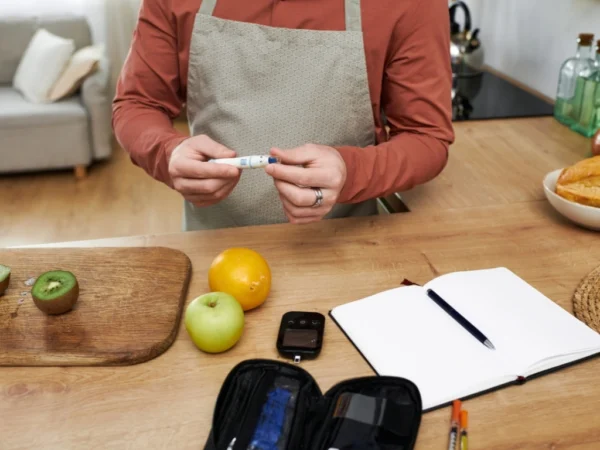









Avoiding food between main meals is a common misconception among people with type 2 diabetes. In reality, it may be more beneficial to eat snacks, especially when there are long gaps in your daily eating schedule.
Snacks, when kept diabetes-friendly and balanced, can help maintain more consistent blood sugar levels instead of contributing to spikes throughout the day. They can also ease hunger, keep energy more even, and prevent overeating later on — benefits that are often missed when snacks are skipped altogether.

What makes a snack diabetes-friendly?
For individuals with type 2 diabetes, choosing snacks that promote stable blood sugar and sustained energy. Paying attention to food composition and overall balance can make snacking both satisfying and effective for managing glucose.
Aim to combine these elements into a single snack:
- Protein helps slow digestion and keeps you feeling full for longer.
- Fiber supports steadier blood sugar and improves satiety. Food sources high in soluble fiber are especially preferred for helping manage diabetes.
- Foods with a low glycemic index (GI) are generally digested more slowly, helping prevent sharp increases in blood sugar.
- Low carbohydrate content (in appropriate portions) may also have little impact on blood sugar, even if they have a high GI. In these cases, “glycemic load,” which takes into account both the food’s GI and the amount of carbs in a serving, may be a more useful measure for blood sugar control.
- Healthy fats contribute to fullness and more balanced energy. If consuming saturated fat, limit your intake to less than 10% of your daily calories (or 7% if at risk for cardiovascular disease).
- Minimal added sugar reduces the risk of rapid glucose spikes. Look for snacks that are ideally less than 5–8g per serving of added sugar.
18 healthy snacks for people with diabetes
Most snacks work best when they contain about 15–30g of carbohydrates, paired with 5–15g of protein and/or fat. Below is a list of snacks that may be good for people with diabetes:
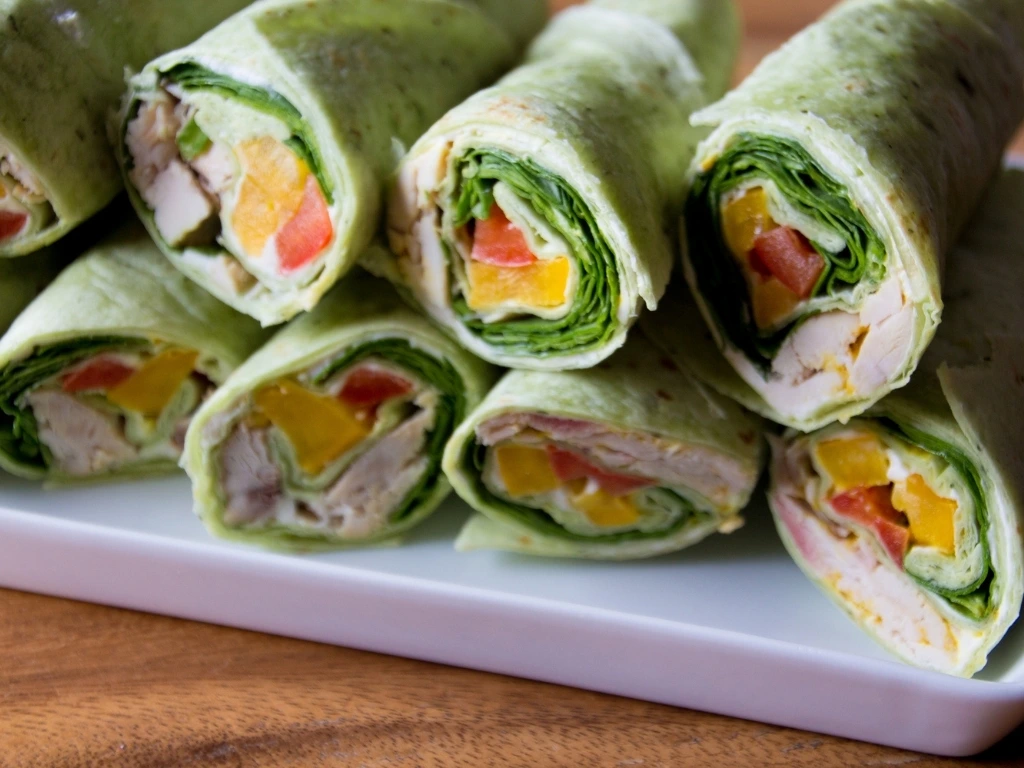
1. Turkey avocado wraps
Smoked turkey provides lean protein, while avocado adds healthy fats and fiber. Wrap these in a small whole-wheat tortilla with lettuce and optional bell peppers, then cut into bite-sized pieces.
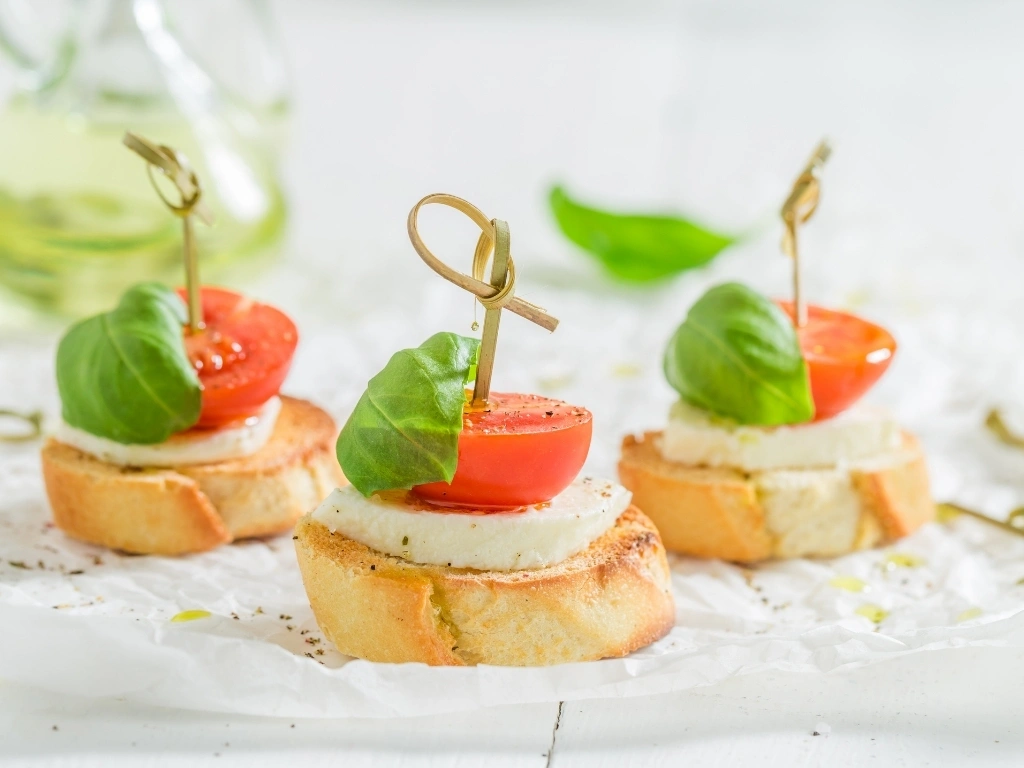
2. Caprese skewers on whole-wheat bread
Stack the following on a small slice of whole-wheat bread: mozzarella for protein and fat, tomatoes for fiber, and walnuts for extra healthy fats. Carefully place the bamboo skewer to hold everything together, and finish off with a drizzle of olive oil and balsamic vinegar. Three to four skewers make a balanced portion.
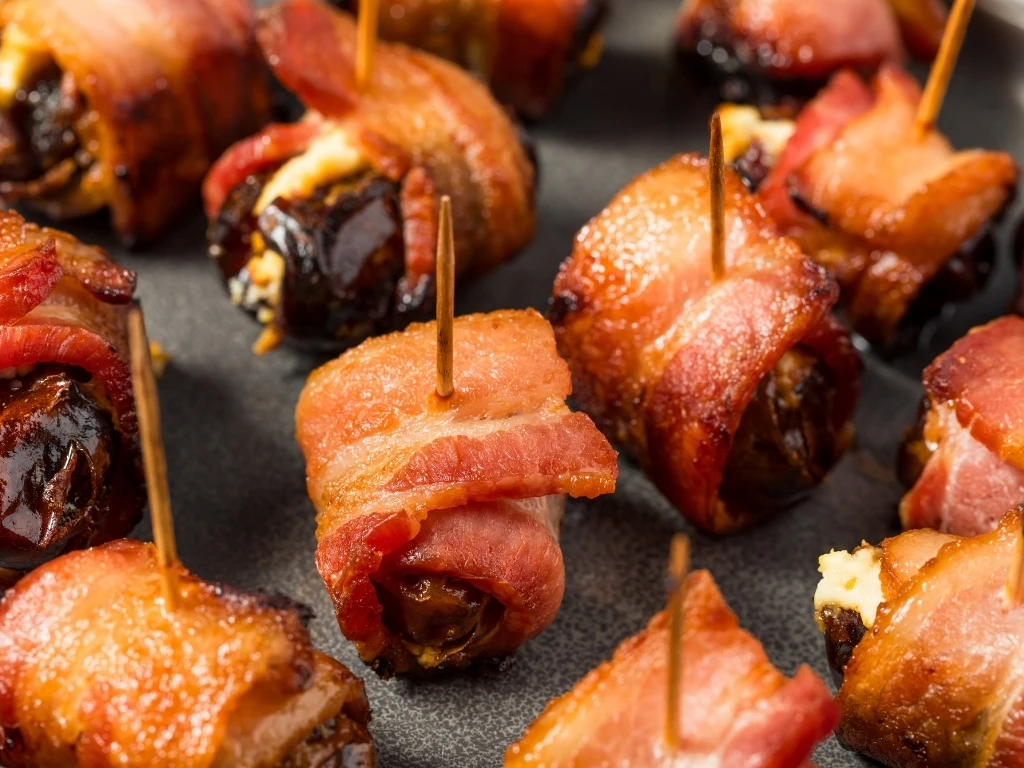
3. Pork-wrapped dates stuffed with goat cheese
Dates supply natural carbs, while walnuts and goat cheese add fats and protein to slow sugar absorption. For better balance, wrap the stuffed dates with pork belly slices to boost protein per serving (processed meats like bacon should be limited when possible, but may still be used in moderation). Stick to one to two small date pieces to keep portions in check.
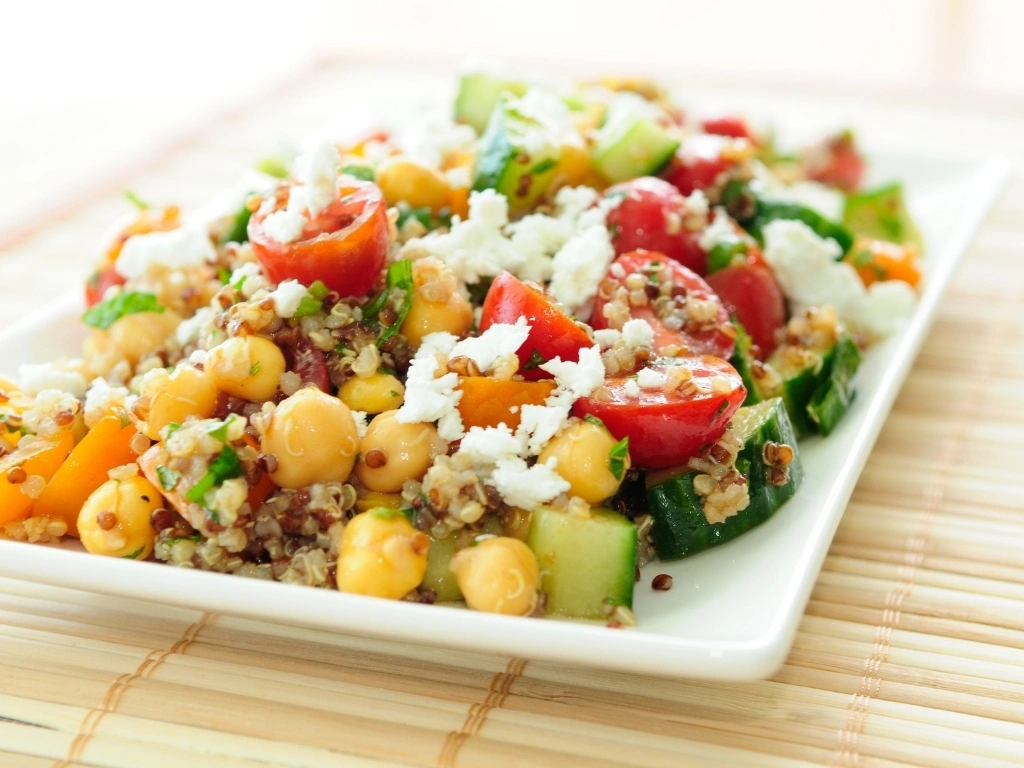
4. Quinoa and chickpea salad
Quinoa and chickpeas both provide plant protein and fiber, while vegetables contribute freshness and micronutrients. Consider adding olives for some healthy fats and feta cheese for extra protein. About ¼ cup of quinoa with a few tablespoons of chickpeas makes for a hearty serving.

5. Mini quiche (oat crust)
Enjoy quiche gluten-free by using about ¼ cup of rolled oats as your crust. For the filling, use eggs, milk, some mushrooms or spinach, and grated cheese. Oats provide a dose of soluble fiber and carbs, while the filling offers protein and fat. Up to two mini quiches work as a snack.
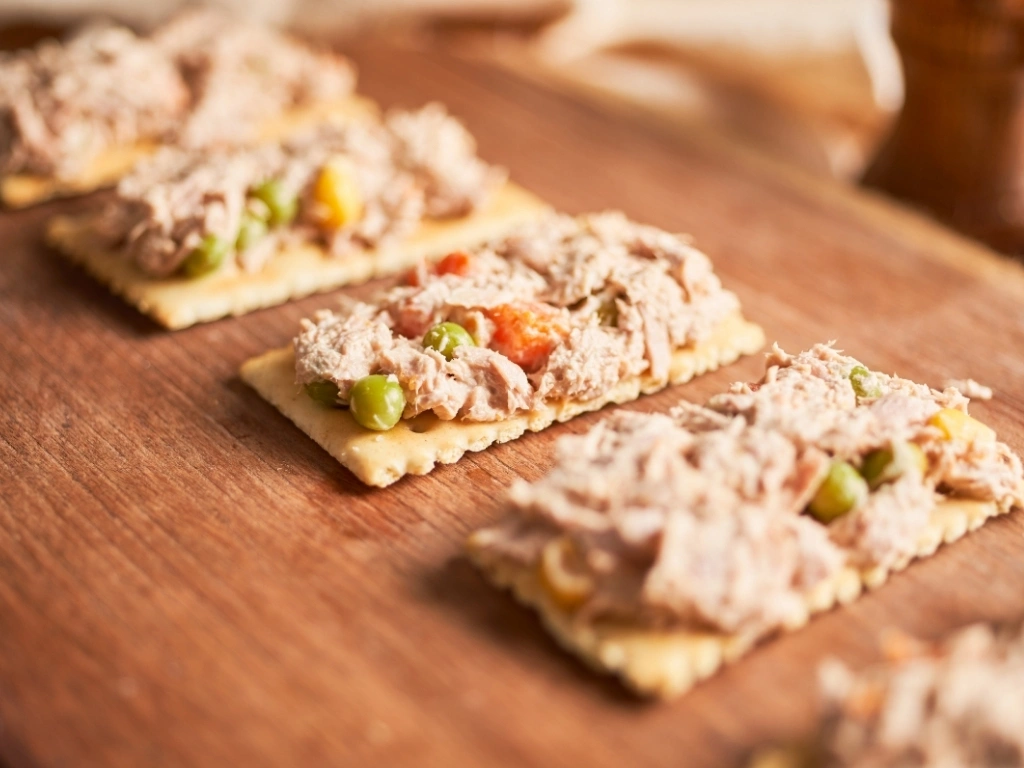
6. Tuna and green pea canapé
Tuna is an excellent source of protein and healthy fats. Complement it with peas (and optional corn and carrots) for some fiber and whole-grain crackers for added complex carbs. About two to three crackers with two to three tablespoons of tuna is considered a balanced portion.
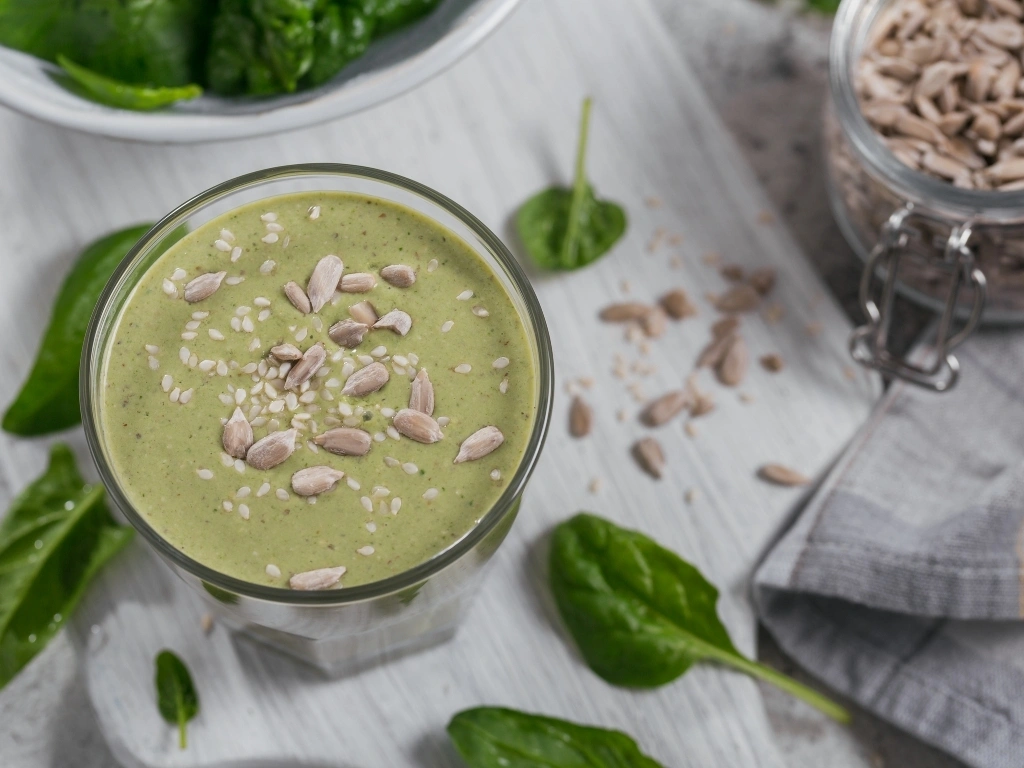
7. Green kefir protein smoothie
If you’re short on time, a green smoothie is always a good snack option for people with diabetes. Kefir is an excellent base, as it provides protein and probiotics that help improve gut health and insulin sensitivity.
Throw in some spinach for fiber and iron, sunflower seeds for healthy fats, fruit like a banana or some berries for flavor and extra fiber, and two to three tablespoons of protein powder. Blend all ingredients to fill one small glass.
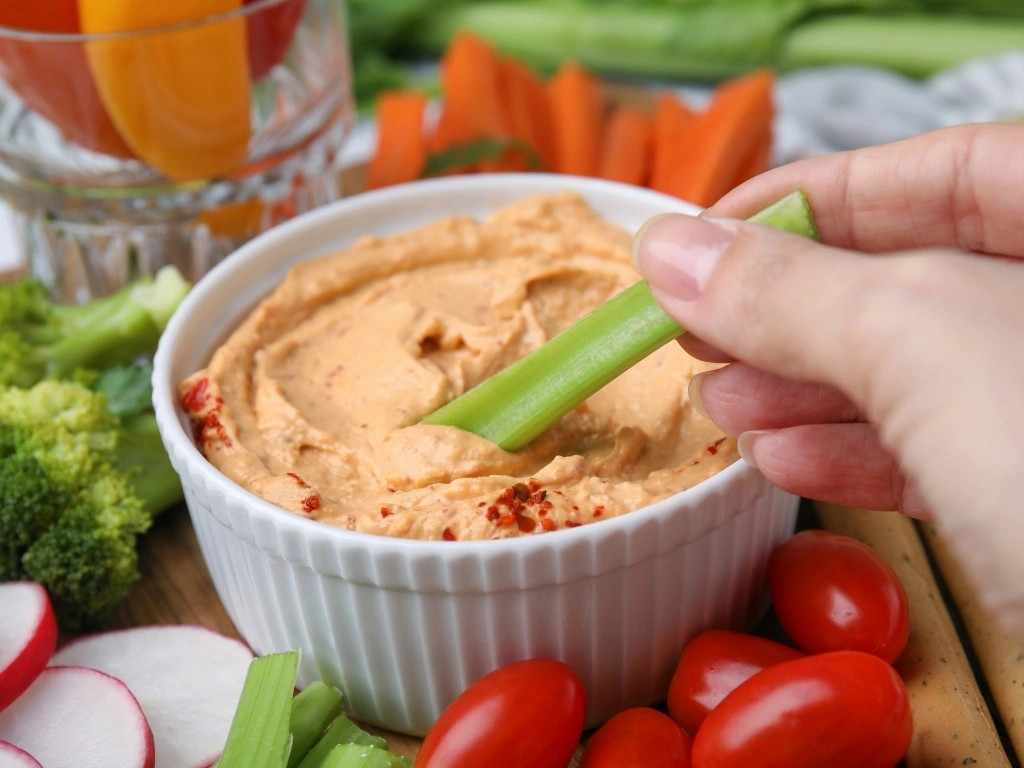
8. Bean and pepper dip with veggies and breadsticks
Grab vegetables rich in fiber, vitamins, and crunch, such as celery, broccoli, and bell peppers. Pair them with a dip made of roasted white beans and red peppers. A small bowl of this dip adds enough protein, flavor, and healthy fats. Serve with breadsticks for added carbs to round out a balanced, satisfying snack.
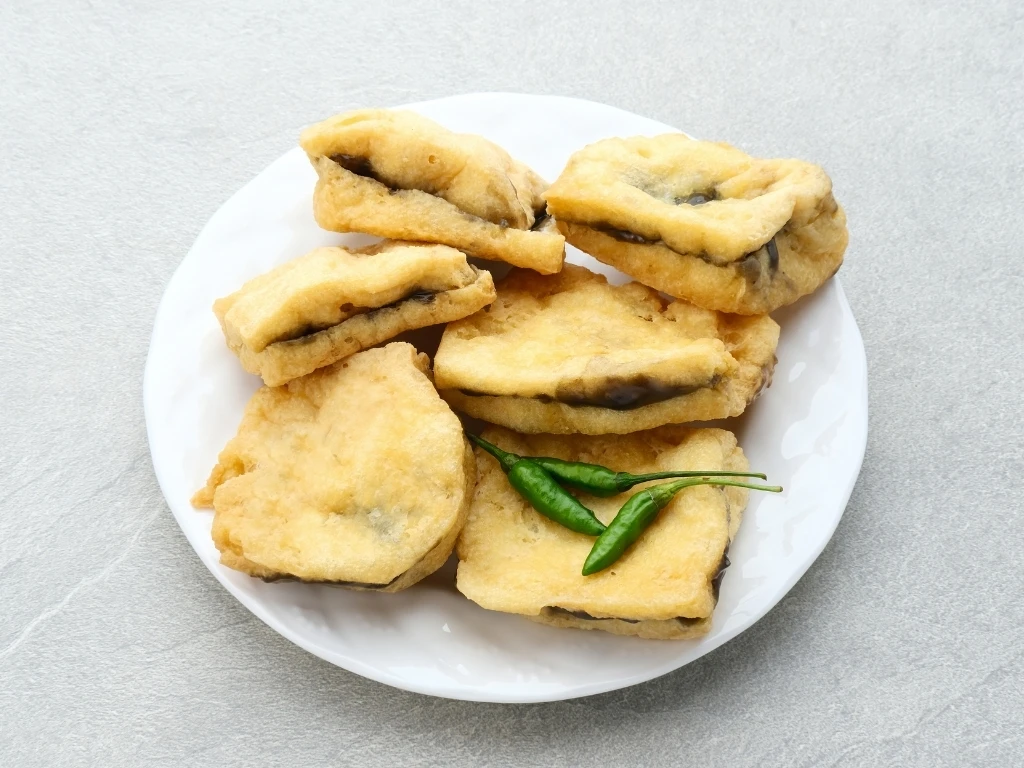
9. Stuffed tofu
Take inspiration from the staple Javanese snack by simply filling tofu cubes with one to two tablespoons of minced shrimp or ground pork and two to three tablespoons of diced vegetables, mixed with fermented black bean sauce. Air-fry until golden brown. Two to three cubes make a light but nourishing snack, providing plant protein, minerals, healthy fats, and a modest amount of carbs.
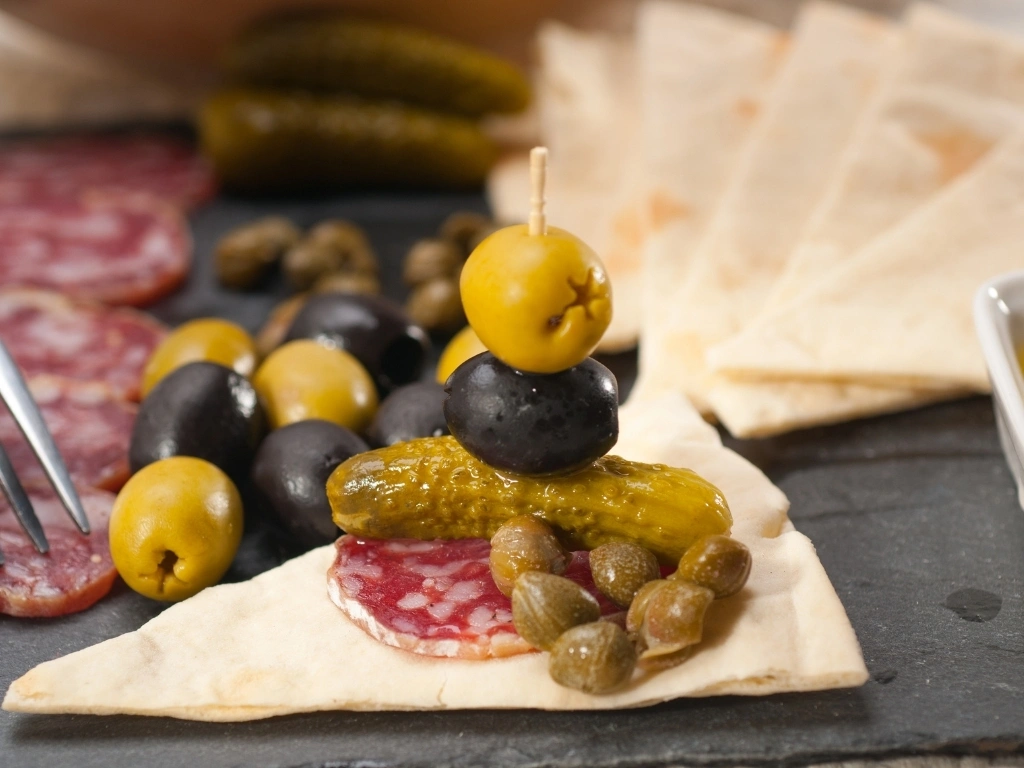
10. Olives, pickles, and salami with flatbread
As mentioned earlier, snacking on processed meats should generally be limited, but for special occasions, eating controlled portions poses no problem.
Pair cured meats like salami with fermented vegetables like pickles and olives. Salami provides protein, olives offer heart-healthy fats, and pickles add flavor and fiber. Eat with a small piece of flatbread for added carbs. Remember to limit your intake to a few slices of salami to keep portions balanced.
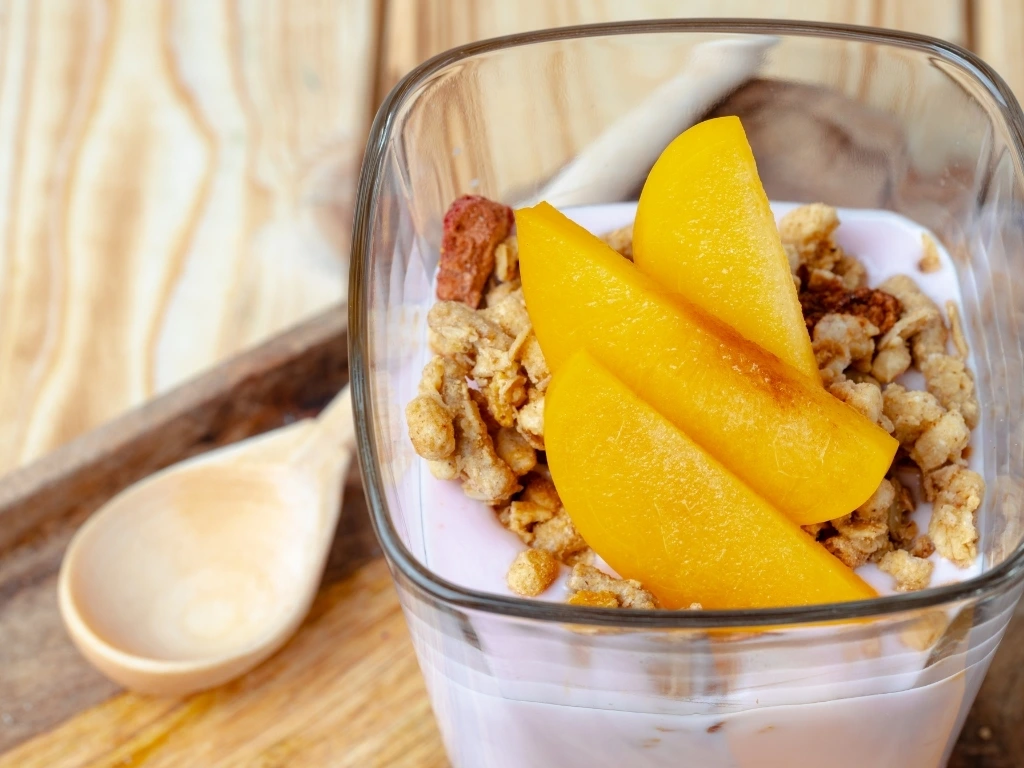
11. Yogurt peach parfait
An unsweetened yogurt parfait is another good diabetic-friendly snack. Combine ½ cup of Greek yogurt with some sliced peach (about ½ cup) and two tablespoons of granola (low sugar, preferably) for a balanced serving of protein, probiotics, and fiber that keeps carbs within a balanced range.
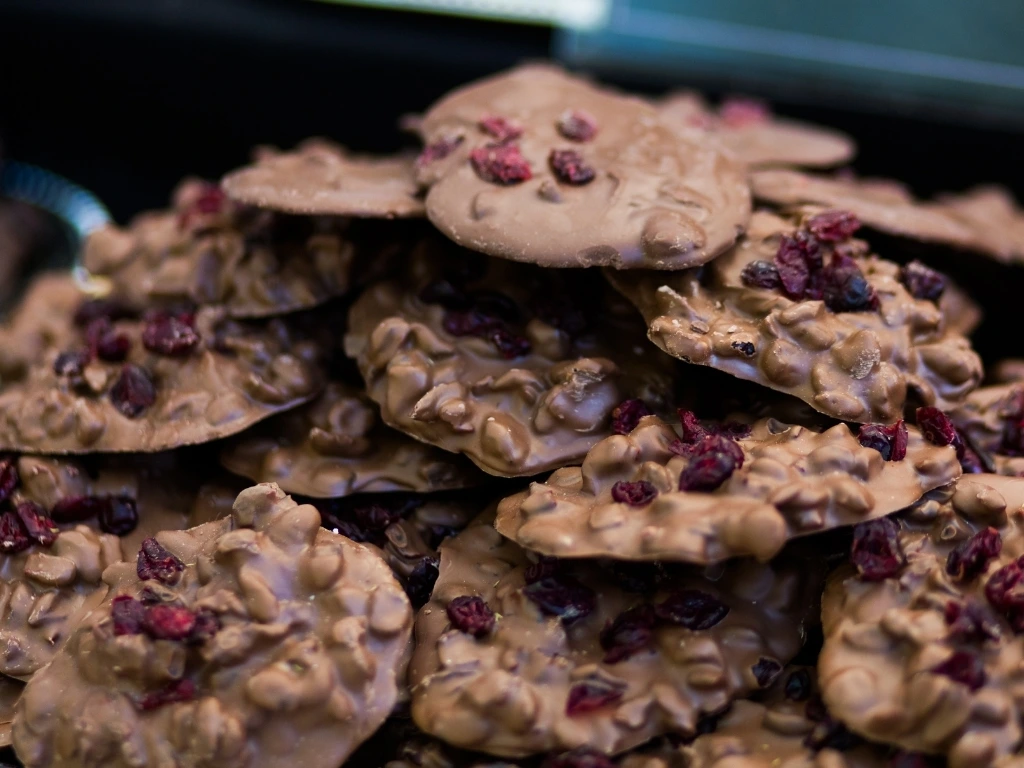
12. Chocolate bites with cranberries and almonds
Dark chocolate (must be 70% or higher) is an enjoyable source of antioxidants, but it can be better with almonds and cranberries that add protein, fats, and fiber. Stick to one to two squares to keep portions moderate.
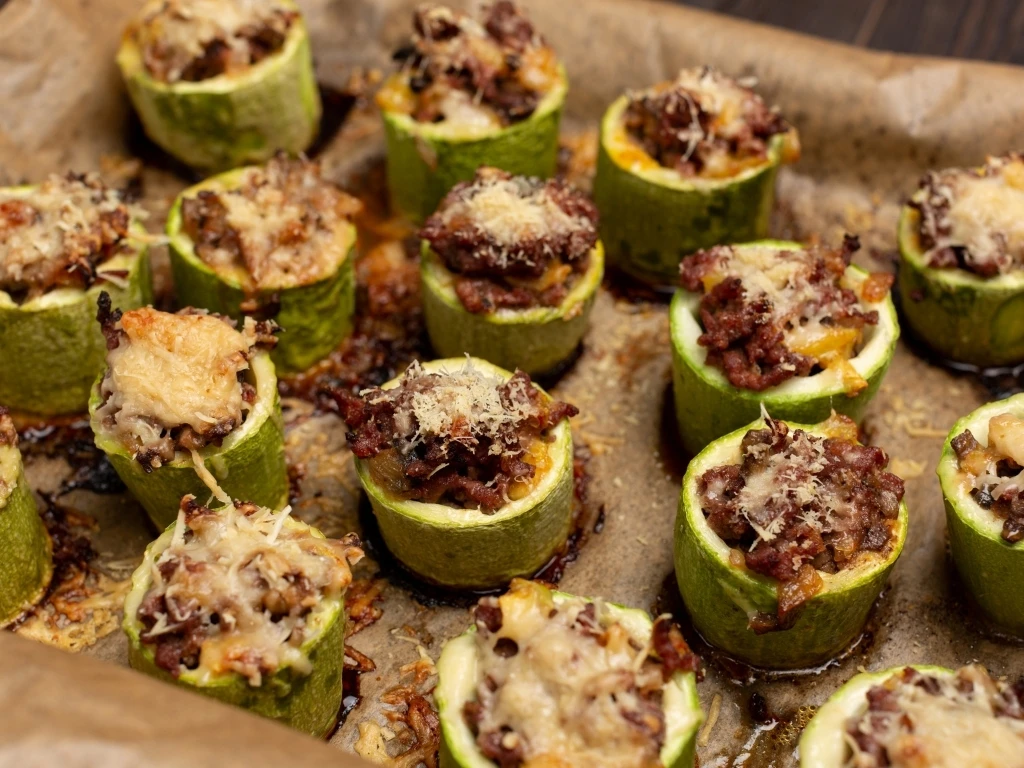
13. Zucchini stuffed with meat, couscous, and cheese
Fill sliced zucchini with ground beef, fluffy couscous, onions, and some herbs and spices to get a flavorful protein. Top with more meat and melted cheese for some fat, and snack on one to two pieces.
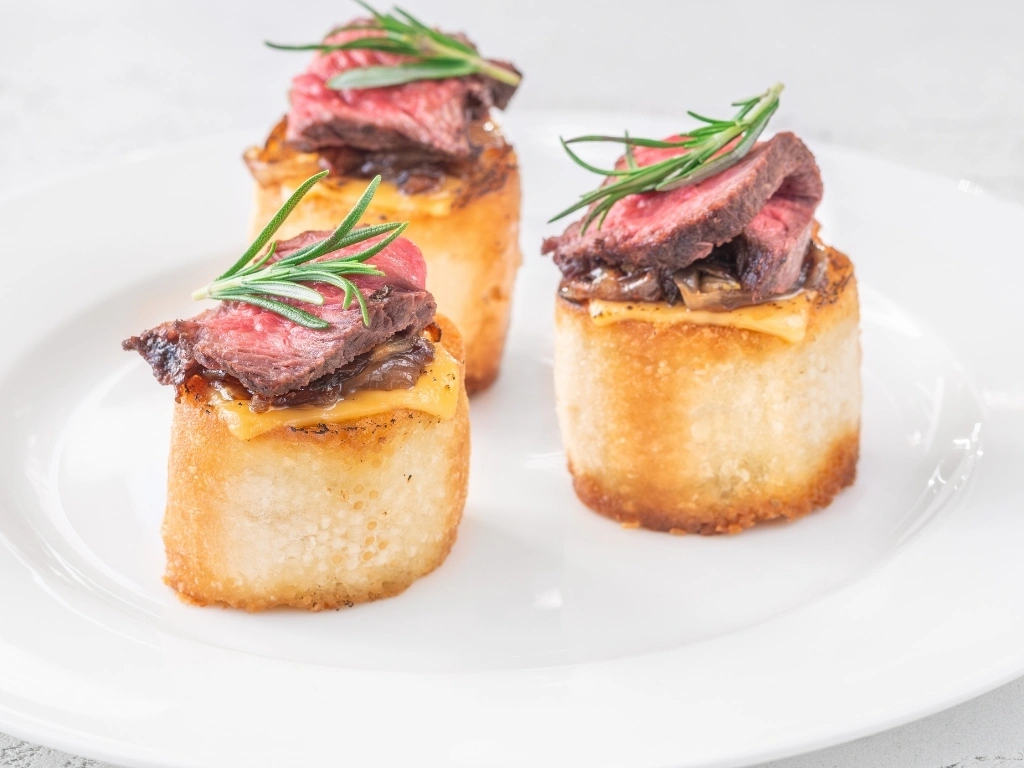
14. Roast beef crostini
Serve roast beef slices and goat cheese or horseradish sauce on toasted bread rounds. Roast beef offers protein and iron, while cheese brings fat and extra protein. You can add optional caramelized onions or fresh lettuce for fiber. One to two rounds are usually enough for a snack.

15. Savory shrimp tartlets
For a satisfying snack that feels indulgent, go for one or two of these protein-rich mini tartlets. Simply boil or grill some shrimp, and make the filling with cream cheese, mayo, lemon juice, capers, and garlic. Assemble everything in the tartlet shell (also a quick source of carbs) for a well-rounded bite.
If the shells are small or low-carb, consider pairing with a modest fruit serving to meet your energy needs.
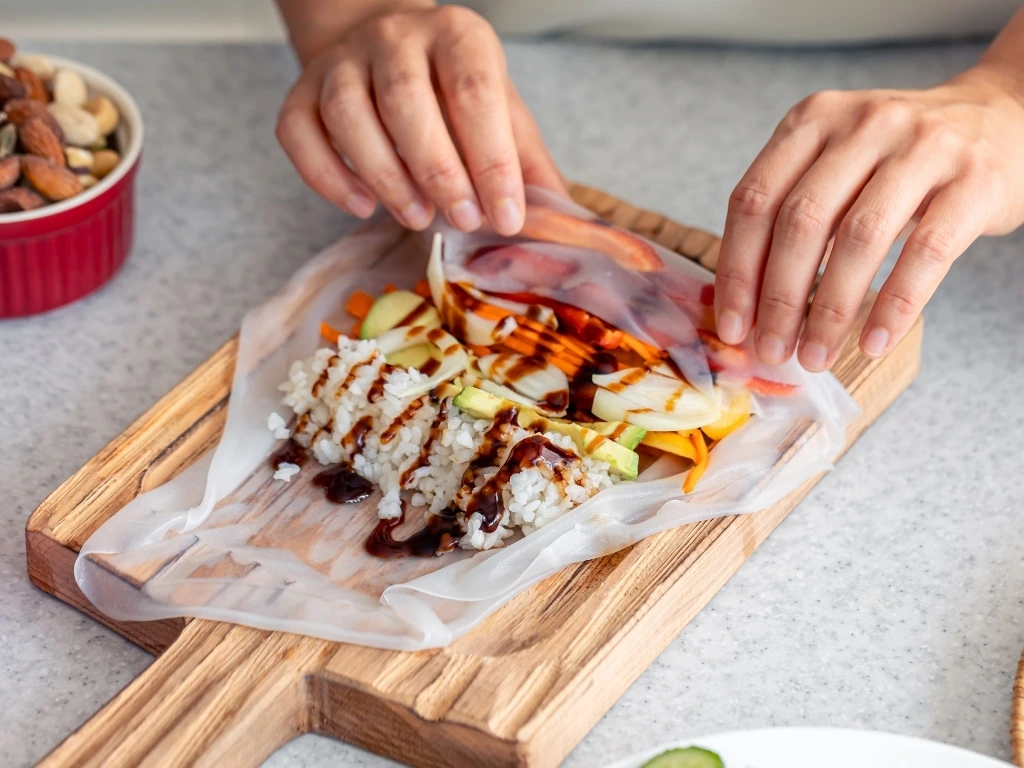
16. Rice paper rolls with tofu and vegetables
Fill rice paper with tofu, avocado, and a medley of carrots, cucumber, and bell peppers, and you have yourself a nice roll rich in flavor, crunch, and all the essentials. Drizzle with soy sauce to finish. Two rolls are enough for a grab-and-go snack that people with diabetes will surely enjoy.
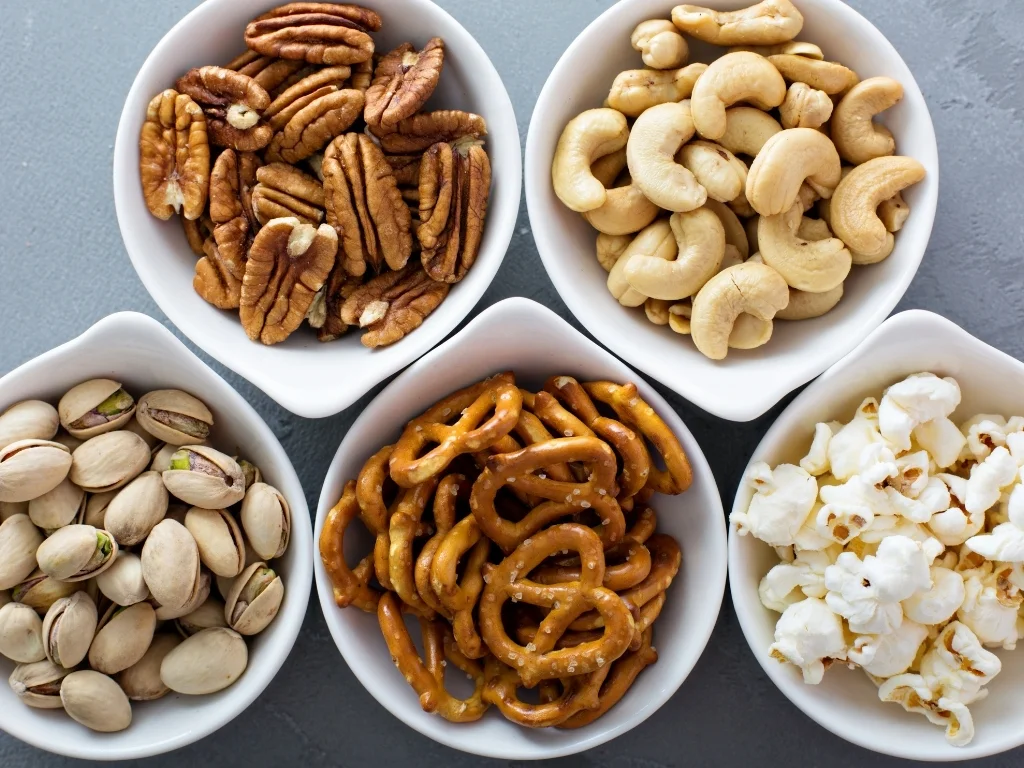
17. Mix of popcorn, pretzels, and nuts
Popcorn can be a good diabetic-friendly snack if prepared mindfully, as it offers low-calorie whole grains with fiber. Combine a small handful (about ¼ cup) of popcorn with different kinds of nuts (preferably peanuts, pistachios, and almonds) for protein and healthy fats, and a few pretzels for carbs.
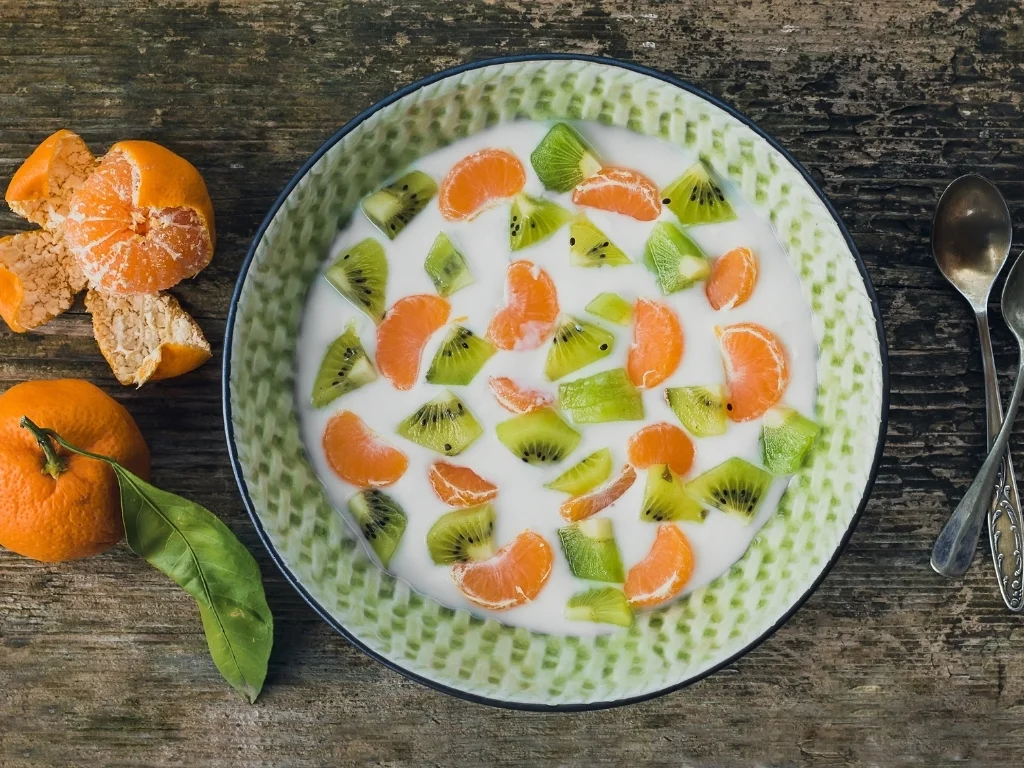
18. Fresh fruit salad in soy milk
Want something low-effort? Slice some oranges and kiwi, put them into a small bowl, and enjoy with soy milk. Fruits provide fiber, hydration, and essential vitamins, while soy milk adds protein and healthy fats. Add breakfast cereals for extra protein as needed.
How often should people with diabetes snack?
Snacking needs vary depending on hunger, activity level, and how your glucose level responds to meals. Some people benefit from small, balanced snacks to maintain steady blood sugar, while others do well with just structured meals. The best approach is what keeps your glucose stable and fits your daily routine.
Common snacking mistakes that affect blood sugar
Certain snacking habits people with diabetes have tend to make the condition harder to manage. Being aware of these patterns can help guide better choices:
- Refined carb-heavy snacks – Foods like chips, pastries, or white bread digest quickly and can cause sudden increases in blood sugar due to low fiber content.
- Large portions without protein or fiber – Eating high-carb foods without balance may lead to spikes followed closely by crashes.
- Frequent sugary drinks or sweet snacks – Regular intake of sweetened beverages and desserts can quickly disrupt blood sugar control when not consumed with a fiber or protein.
- Distracted eating – Eating while doing something else may lead to overeating and reduced awareness of portions.
Build balanced eating habits with Health Loft
Snacks can help manage diabetes when they’re made intentionally and with balanced nutrition in mind. Working with a dietitian experienced in diabetes care can make these choices easier to apply consistently.
At Health Loft, our dietitians provide personalized guidance based on your blood sugar patterns, meal timing, and medication or insulin use. Instead of offering restrictive plans, we help you build balanced snacks, adjust portions, understand how different foods affect your glucose levels, and create strategies to prevent spikes and dips throughout the day.
Learn how tailored nutrition support from a Health Loft dietitian can help you feel more in control of your daily routine.
This article was reviewed by Katie Whitson, RD, LD. It is intended for informational purposes only and does not replace personalized nutritional advice.