









Can changing what you eat actually ease symptoms of autoimmune conditions? If you’ve tried medications, supplements, or lifestyle changes only to be met with mixed results, that question has probably crossed your mind.
The autoimmune protocol (AIP) diet was developed as a structured elimination approach to explore how certain foods may be affecting your symptoms. While helpful for some people, AIP is not a cure for autoimmune disease. Instead, it works best as part of a broader treatment plan, helping identify personal food sensitivities and potentially easing symptoms.

How does diet impact autoimmune disease?
Autoimmune diseases occur when the immune system mistakenly attacks your own healthy tissues. These conditions are complex, with several factors — genetics, environment, infections, stress, sleep, and lifestyle in general — often contributing to how these conditions develop and progress. In recent years, researchers have paid closer attention to the possible role of diet, mainly due to the gut-immune connection.
A large portion of the immune system is closely tied to the digestive tract, where beneficial gut bacteria help regulate immune responses and inflammation. When gut health is disrupted — whether by stress, illness, or dietary factors — immune balance may also be affected. However, researchers do not fully understand if gut changes do drive autoimmune disease or occur as a result of it.
This is why certain foods may trigger inflammation for some individuals, though this isn’t a universal experience, as food tolerance tends to vary largely from person to person.
What is the AIP diet?
The autoimmune protocol diet (sometimes called the autoimmune paleo diet) is a structured, three-phase elimination diet designed to help people with autoimmune conditions determine personal sensitivities, particularly foods that may be contributing to symptom flares.
AIP focuses on temporarily removing foods that may prompt immune reactions or disrupt gut health. These foods will then be gradually reintroduced to see how the body responds. Since one person’s food triggers may be well-tolerated by another, the approach to AIP is best personalized.
By reducing potential dietary triggers for a brief period while increasing nutrient density, AIP may help reduce inflammation in some individuals. However, food restriction is meant for short-term use only and should not be considered as a permanent strategy.

3 phases of the AIP diet plan
Each phase of the autoimmune protocol diet plays a crucial part in piecing together a clearer picture of your food triggers and eventually building a sustainable way of eating that works specifically for you.
Phase 1: Elimination
The elimination phase is the most structured part of the autoimmune protocol diet. During this stage, foods that may act as immune triggers are temporarily removed to give the body time to stabilize. This stage typically lasts from six weeks to six months, depending on your progress.
Carefully tracking changes in your digestive patterns, energy levels, and key symptoms — preferably in writing, through a detailed symptom journal or log — can make it much easier for you and your healthcare provider to tackle the second phase.
Foods to avoid
The following foods are temporarily eliminated in this first phase to reduce potential antigen exposure and assess your tolerance. Some of these can be reintroduced at a later stage of the AIP diet. It is important to note that many of these foods are removed based on clinical observations. Not everyone will have the same reaction to them.
- Grains (including gluten-free grains such as rice and corn)
- Dairy products
- Legumes (beans, lentils, peanuts)
- Eggs
- Nuts and seeds
- Nightshade vegetables (tomatoes, peppers, eggplant, white potatoes)
- Processed foods and additives
- Artificial sweeteners
- Alcohol
- Refined sugars
Foods to eat
While restrictive, this phase serves as an opportunity to shift the focus toward nutrient-dense whole foods, including:
- High-quality animal proteins (grass-fed meats, poultry, wild-caught fish, organ meats)
- A wide variety of non-starchy vegetables
- Starchy vegetables like sweet potatoes and squash
- Moderate amounts of fruit
- Healthy fats such as olive oil, coconut oil, and avocado oil
- Bone broth and fresh herbs for added nutrients and flavor
Prioritizing variety is especially important during this stage. Rotate protein sources and vegetables to keep nutrient intake adequate and curb the risk of deficiencies.
Phase 2: Reintroduction
This next phase is where personalization really begins. Instead of adding everything back at once, foods should be reintroduced one at a time, typically spaced several days apart. This gives you enough time to monitor for any delayed reactions, which may be common in autoimmune conditions.
Some people start with foods they enjoy the most, while others base it on what they think they’d tolerate better. Phase 2 lasts around one to three months, and, like with Phase 1, taking note of your symptoms remains important at this stage.
Phase 3: Maintenance
This last phase functions essentially as a transition into a long-term, less restrictive eating pattern built around the foods you tolerate well. There’s no fixed timeline to follow for this one. Successfully reintroduced foods should be incorporated back into regular meals, and over time, your eating pattern evolves as you identify more “safe” foods and gradually rebuild the diversity of your diet.

Who is the AIP diet for?
The autoimmune protocol diet often becomes an option for some people who don’t see significant improvement from more general anti-inflammatory diets. AIP may be most valuable for those who have been diagnosed with autoimmune diseases, including:
- Rheumatoid arthritis
- Hashimoto’s thyroiditis
- Inflammatory bowel diseases (IBD), specifically Crohn’s disease and ulcerative colitis
- Systemic lupus erythematosus (lupus)
- Psoriasis
- Multiple sclerosis
- Celiac disease
- Graves’ disease
Individuals experiencing the following inflammatory symptoms may also stand to benefit from AIP:
- Persistent fatigue
- Joint or muscle pain
- Digestive discomfort
- Headaches
- Skin flare-ups
Potential benefits of the AIP diet
Research on the AIP diet is currently limited, though early results suggest that some people with autoimmune conditions may experience meaningful improvements in symptoms and quality of life. Here’s what available studies have observed in specific conditions:
Improved well-being (Hashimoto’s thyroiditis)
In two small clinical trials, individuals with Hashimoto’s thyroiditis who tried AIP for 10 to 12 weeks reported improvements in physical and emotional well-being, specifically in the following areas:
- Overall comfort level
- General perception of health
- Symptom burden
- Certain inflammatory markers
However, thyroid hormone levels did not consistently improve. Participants also received guidance on stress management, sleep, and other lifestyle factors alongside dietary changes, which may have contributed to outcomes.
Symptom relief (IBD)
In a small study of individuals with active IBD, an 11-week AIP intervention was associated with:
- Clinical remission in many participants
- Improvements observed during endoscopic evaluation
- Reduced digestive symptoms
Common inflammatory markers did not significantly change. Also, since some participants used supplements such as vitamin D or iron, further research is needed to better understand how much benefit can be attributed specifically to the diet.
Reduced pain and fatigue (rheumatoid arthritis)
A non-randomized crossover study involving people with rheumatoid arthritis reported improvements in:
- Sleep quality
- Fatigue
- Joint pain
- Overall disease severity scores
Because of the study’s size and design, results should be interpreted with caution.
Overall, larger and well-controlled trials are necessary to gauge AIP’s long-term effects and nutritional risks. For now, this diet is best viewed as one strategy that may provide insight and partial relief for some people, especially when guided by a qualified healthcare professional.
7-day sample AIP diet meal plan
If you’re considering the autoimmune protocol diet, having a simple framework can make it feel far less overwhelming. Each meal in this seven-day sample plan includes a balance of AIP-friendly protein, vegetables, and healthy fats, with repeatable ingredients to simplify planning and prep.
Day 1
- Breakfast: Turkey patties, sautéed spinach, and baked sweet potato
- Lunch: Grilled salmon over mixed greens with cucumber, olive oil, and lemon
- Dinner: Slow-cooked beef stew with carrots, zucchini, and fresh herbs
Day 2
- Breakfast: Coconut milk smoothie with spinach and blueberries
- Lunch: Leftover beef stew with added kale
- Dinner: Roast chicken, cauliflower mash (with olive oil), and steamed broccoli
Day 3
- Breakfast: Bone broth with shredded chicken and sautéed greens
- Lunch: Sardine salad with lettuce, olives, and avocado oil dressing
- Dinner: Baked cod, roasted Brussels sprouts, and butternut squash
Day 4
- Breakfast: Ground pork sautéed with cabbage and apple slices
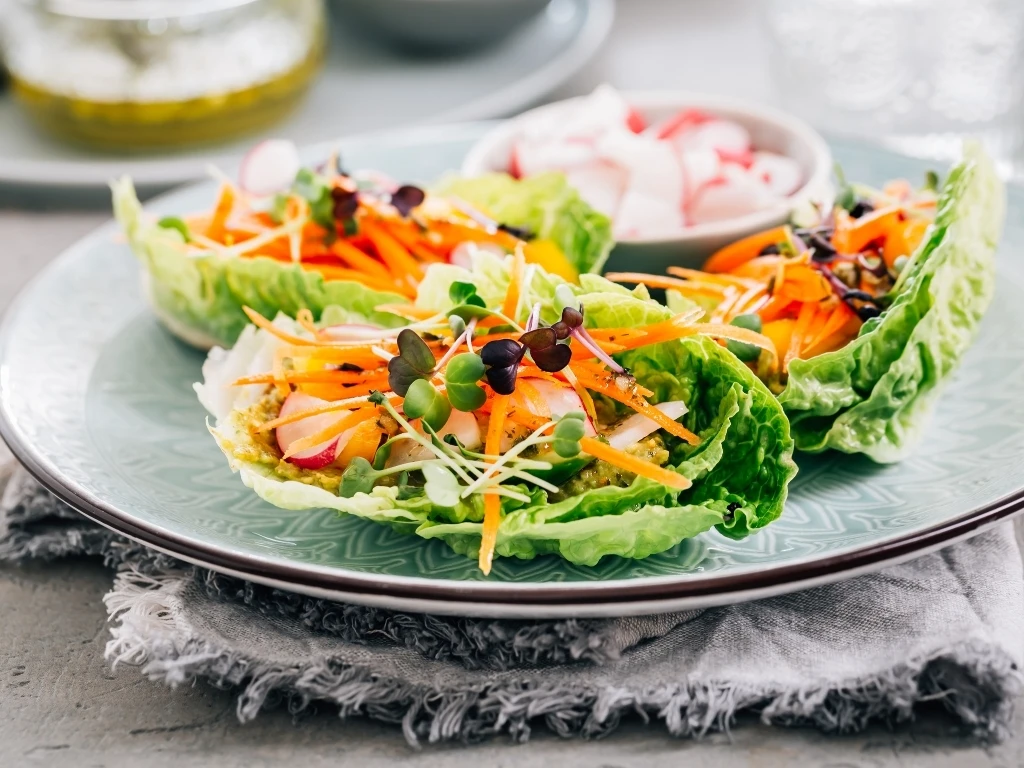
- Lunch: Turkey lettuce wraps with shredded carrots and fresh herbs
- Dinner: Lamb chops, roasted carrots, and garlic sautéed zucchini
Day 5
- Breakfast: Leftover lamb with roasted sweet potatoes
- Lunch: Grilled shrimp salad with mixed greens, cucumber, and olive oil
- Dinner: Slow-cooker chicken thighs, mashed squash, and steamed asparagus
Day 6
- Breakfast: Plantain hash cooked in coconut oil with ground turkey
- Lunch: Wild-caught tuna salad with avocado and leafy greens
- Dinner: Bison burgers (no bun), roasted cabbage, and baked yams
Day 7
- Breakfast: Coconut yogurt (non-dairy) with berries and cinnamon
- Lunch: Bone broth and chicken vegetable soup
- Dinner: Baked halibut, sautéed kale, and roasted root vegetables
Feel free to make ingredient swaps, repeat meal ideas, and batch-cook proteins or vegetables ahead of time to make the week much easier.
Risks and considerations of the AIP diet
Despite its potential benefits, AIP is not appropriate for everyone. Individuals who should approach this diet carefully include:
- Those with a history of disordered eating
- Individuals who are already underweight or struggling to maintain adequate calorie intake
- Pregnant or breastfeeding individuals
- Anyone with complex medical conditions that require specialized nutrition care
Some factors to consider when weighing whether to try AIP:
- Potential nutrient gaps: Removing entire food groups can make certain nutrients (such as calcium, vitamin D, and iodine from lack of dairy; B vitamins from lack of grains and legumes; or B12 and iron, depending on protein intake) harder to obtain.
- Insufficient calorie intake: AIP also removes many calorie-dense foods (such as grains, legumes, nuts), which may cause some individuals to unintentionally undereat, especially if their appetite is already low due to illness.
- Social and financial demands: Grocery costs may increase in favor of fresh produce, seafood, and high-quality meats, while meal prep requires time and extensive planning.
- Psychological considerations: Any elimination diet carries the risk of increasing food fear or anxiety if not carefully approached.
Personalize your approach to nutrition with a Health Loft dietitian
While the autoimmune protocol diet can be a helpful tool for some people, that doesn’t make it immediately necessary for everyone with an autoimmune condition. Due to its restrictive nature, it requires careful planning to avoid complications. After all, autoimmune diseases are highly individual, and so should the dietary strategies used to help manage symptoms.
Working with a registered dietitian who specializes in autoimmune conditions can help ensure that any nutrition plan — whether AIP or another approach — remains balanced, evidence-based, and tailored to your actual diagnosis, current symptoms, medical history, and overall lifestyle. They can guide how you temporarily remove and gradually reintroduce foods, monitoring your nutrient intake, adjusting the plan based on your body’s needs and responses, and keeping the focus on balance rather than plain restriction.
Autoimmune care rarely comes down to a single solution. But with thoughtful guidance and a personalized plan, food can become a supportive aspect of your treatment plan. Connect with a Health Loft dietitian today.
This article was reviewed by Katie Whitson, RD, LD. It is intended for informational purposes only and does not replace personalized nutritional advice.