









Adding more fiber to your diet is often recommended for better digestion. While that sounds simple enough, there’s a bit more to understand before increasing your intake, starting with the fact that fiber isn’t just one thing.
Soluble fiber and insoluble fiber each play distinct roles in how your body processes food. Learning more about these key differences can help you make better, more supportive choices for your gut health.

What is dietary fiber?
Dietary fiber is a type of carbohydrate found in plant foods that your body doesn’t fully digest. Instead of being broken down for energy, it moves through your digestive system and helps regulate how food is processed.
Fiber plays a role in digestion, gut health, and even how full you feel after meals. The right type and amount can vary from person to person, and if you have digestive conditions like irritable bowel syndrome (IBS) or inflammatory bowel disease (IBD), certain types of fiber may feel better than others.
To make sense of it, it helps to look at soluble and insoluble fiber separately.
What is soluble fiber?
Soluble fiber dissolves in water and forms a gel-like substance in the digestive tract. This gel slows how quickly food moves through your system. As a result, digestion happens more gradually, and nutrients may be absorbed at a steadier pace.
Benefits of soluble fiber
Soluble fiber contributes to digestion in several meaningful, though often subtle, ways:
Helps maintain steady digestion
By slowing digestion, soluble fiber promotes a more even flow through the digestive system. This can help reduce the feeling of being overly full right after eating or hungry again too quickly, making meals feel more satisfying and predictable.
Aids in blood sugar balance
Soluble fiber is associated with slower carbohydrate absorption. This can help prevent sharp spikes and drops in blood sugar, especially when meals include protein and fat alongside fiber. This is one reason fiber-rich meals tend to keep energy levels more stable.
May benefit heart health
Certain types of soluble fiber are linked to lower levels of low-density lipoprotein (LDL) cholesterol — sometimes referred to as “bad” cholesterol — when eaten consistently. Foods like oats, beans, and some fruits are often included in heart-supportive eating patterns. Consistency matters here, as these effects typically require regular intake for them to be observed.
Supports gut health
Soluble fiber can act as fuel for beneficial gut bacteria. When these bacteria break it down, they produce compounds that support the gut environment. A healthier gut environment may also support better digestion overall.
If you’re trying to include more high-fiber soluble foods, options like oats, lentils, chia seeds, and apples are easy places to start.
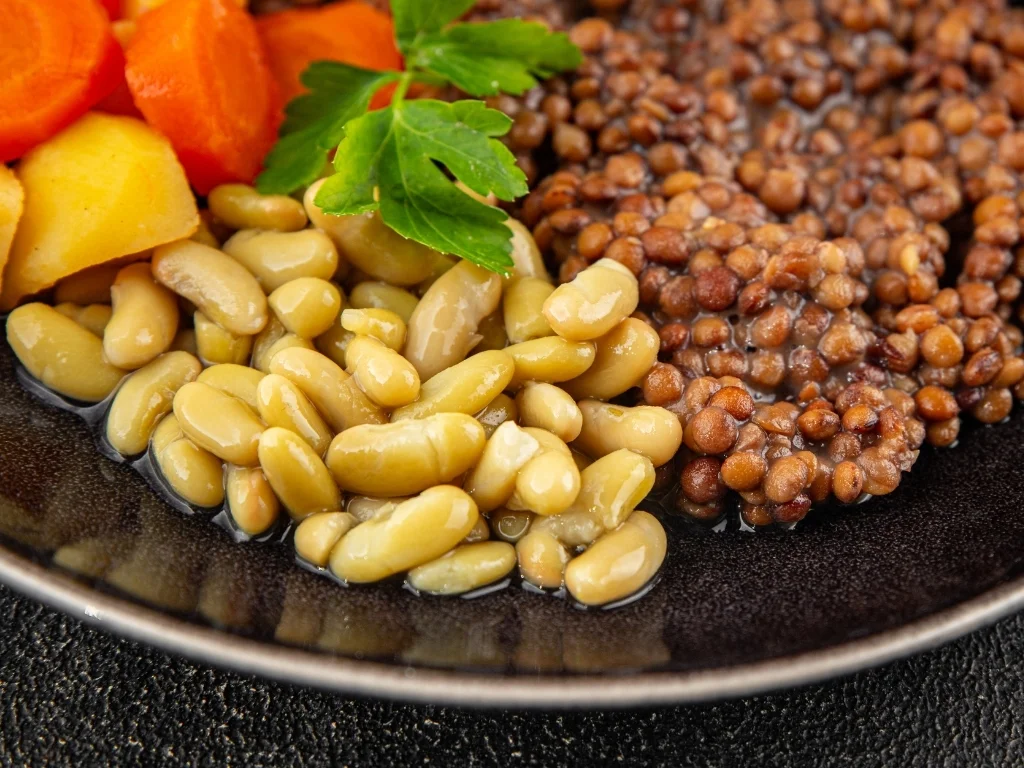
Foods rich in soluble fiber
These high-fiber soluble foods tend to slow digestion and are easy to include in meals:
- Oats and oat bran
- Barley
- Beans and lentils
- Apples
- Oranges
- Carrots
- Sweet potatoes
- Chia seeds
- Ground flaxseeds
- Psyllium husk
What is insoluble fiber?
Insoluble fiber, on the other hand, does not dissolve in water. Instead, it adds bulk to stool. In simple terms, it helps keep things moving.
Benefits of insoluble fiber
Insoluble fiber supports digestion mainly through its effect on stool bulk and movement:
Helps promote regular bowel movements
By increasing stool volume, insoluble fiber helps food move more efficiently through the intestines, leading to more regular bowel movements. For many people, this can reduce the feeling of irregular or incomplete digestion.
May help prevent constipation
Insoluble fiber is commonly associated with reducing constipation, as it helps keep stool from becoming too firm or difficult to pass. Drinking enough water alongside fiber is important to achieve this benefit.
Encourages digestive movement
Bulk in the digestive tract helps stimulate natural intestinal movement, which can be helpful if digestion feels slow or irregular. This also makes digestion feel more comfortable overall.
May boost overall gut function
Regular elimination is a key part of maintaining digestive health. Insoluble fiber helps maintain this by keeping waste moving through the system more consistently. Over time, this can contribute to a more stable digestive pattern.

Foods rich in insoluble fiber
These foods help add bulk and support movement:
Whole wheat and wheat bran
- Brown rice
- Quinoa
- Leafy greens
- Broccoli
- Cauliflower
- Green beans
- Nuts and seeds
- Potato skins
- Cucumbers
How long does fiber take to work?
The answer depends on the type of fiber, your current diet, and how your body responds. Some people notice changes in digestion within a few days of increasing fiber, especially with insoluble fiber and bowel regularity. For others, it may take a couple of weeks for the body to adjust.
The key is to increase fiber intake gradually. Consuming too much fiber in a short span of time can lead to bloating or abdominal discomfort. It also helps to stay hydrated to see a more notable difference without the risk of digestive symptoms.
Which foods are best to include in your diet?
Including a mix of both soluble and insoluble fiber is generally more effective than focusing on just one. By combining both, you can round out the benefits you enjoy: steady digestion, regular bowel movements, and a balanced gut environment.
The easiest way to achieve this balance is by observing a varied, plant-rich diet that makes fiber a mainstay in everyday nutrition. Whole foods are usually the best choice for this, as they provide both soluble and insoluble fiber along with other nutrients your body needs. Incorporate different fruits, vegetables, whole grains, legumes, nuts, and seeds throughout your meals.
When to consider fiber supplements
Supplementation may be helpful in certain situations, especially for individuals who:
- Do not meet the required daily intake of fiber (25g for women and 38g for men)
- Experience persistent digestive issues like constipation, irregular bowel habits, or bloating, particularly due to inadequate fiber intake
- Developed hemorrhoids (swollen veins in the lower rectum) due to chronic diarrhea or straining from constipation
- Aim to support weight management
Fiber supplements may also help some people feel fuller or support digestion, but they shouldn’t replace whole foods as the foundation of recovery. Supplements are most effective when paired with balanced meals and enough fluid intake.
Because fiber needs can vary widely, personalized guidance can help you find the right balance between soluble and insoluble fiber.
Boost digestive health with a Health Loft dietitian to help you out
When you understand the difference between soluble fiber versus insoluble fiber, it becomes easier to choose foods that actually support how you feel day to day. But figuring out the right balance for your body requires a bit more thought.
Everyone’s digestive system responds differently, especially in the presence of underlying conditions like IBS, Crohn’s disease, or other gut sensitivities, where adjusting both the type and amount of fiber may be necessary.
Working with a registered dietitian removes the need for trial-and-error. At Health Loft, our gut health nutrition specialists can help you identify which types of fiber (and in what amounts) fit your individual needs. We guide you in integrating fiber into your meals in a way that complements your lifestyle, eating habits, and health goals, while minimizing digestive discomfort.
Beyond just fiber, connecting with a Health Loft dietitian also helps you build a sustainable, nutrient-rich diet that supports digestion and your body overall.
This article was reviewed by Adrienne DePaul, MS, RDN. It is intended for informational purposes only and does not replace personalized nutritional advice.