









Digestive issues are common in babies, especially as they begin trying new foods. While an upset stomach and changes in appetite are often a temporary but normal part of development, some symptoms may be triggered by certain foods like gluten. Celiac disease, an autoimmune disorder that impacts the small intestine and the body’s ability to absorb nutrients, is among these gluten-related conditions that may potentially begin in infancy.
Recognizing the signs of celiac disease in babies and learning to distinguish them from other potential gluten-related conditions can help to ensure that your child receives timely, appropriate testing and care.

When does celiac disease develop in babies?
Celiac disease is an autoimmune disorder in which the immune system reacts negatively to gluten, resulting in damage to the small intestine lining. This can make it harder for the body to absorb and use nutrients that are necessary for an infant’s growth and development.
Celiac disease in babies develops after gluten is introduced into a baby’s diet, usually between six and nine months of age, when the child starts consuming gluten-containing baby foods, cereals, bread, or pasta.
The specific timing, however, can vary widely, as some babies develop symptoms soon after they begin eating gluten, while for others, months or even years can pass before the condition becomes active.
There are also instances when babies are asymptomatic, meaning they show no obvious signs of celiac disease, even if the disease process has started. For this reason, healthcare professionals may recommend testing for children who are at higher risk of developing celiac disease.
Risk factors of celiac disease in babies
Not every infant who eats gluten will develop celiac disease. In fact, many babies tolerate foods containing wheat, barley, and rye without any issues. However, celiac disease can occur in babies with certain genetic and environmental risk factors, such as the following:
Family history and genetic predisposition
Family history is one of the strongest risk factors for celiac disease. Babies who have a parent or sibling with celiac disease are much more likely to develop the condition. According to the Celiac Disease Foundation, first-degree relatives have about a 1 in 10 chance of developing celiac disease.
This is because genetics plays a rather critical role in celiac disease development risk. About 95% of people with the condition carry at least one of two specific immune system genes called HLA-DQ2 or HLA-DQ8. These genes act as receptor molecules on immune cells that mistakenly flag gluten as harmful.
However, many individuals still carry these genes without ever developing celiac disease, which is why testing these markers is often used for ruling out celiac, as opposed to confirming it.
Associated medical conditions
Certain health conditions are linked with a higher risk of celiac disease. These include:
- Type 1 diabetes
- Autoimmune thyroid diseases, such as Hashimoto’s or Graves’ disease
- Some chromosomal conditions, such as Down syndrome or Turner syndrome
- Selective immunoglobulin A (IgA) deficiency (where the body is unable to produce enough or any IgA, an antibody that protects from infections)
Children who have a higher likelihood of developing these conditions should be monitored more closely for signs of celiac disease.
Environmental factors
Researchers are looking into how environmental factors influence the development of celiac disease, though recent findings report that even supposedly trivial factors like the season of birth may actually play some role in certain cases. A 2024 study reported that children born in spring or summer who carry a specific gene variant may be significantly more prone to developing celiac disease.
Past illnesses and infections
Early childhood infections, such as respiratory or gastrointestinal illnesses, may also influence gut health and immune responses. Researchers are further exploring how the gut microbiome, the community of bacteria living in the digestive tract, might affect whether children who are genetically susceptible to celiac disease will actually develop the condition.
Symptoms of celiac disease in kids, depending on age range
Symptoms of celiac disease tend to differ in each person, though certain signs of disease may be more likely to be observed among particular age groups.
Celiac disease symptoms in babies (under 3 years old)
In infants, symptoms often include:
- Diarrhea
- Vomiting or frequent digestive upset
- Bloated or swollen belly
- Abdominal discomfort
- Pale, foul-smelling stools
- Poor weight gain
- Irritability
Celiac disease symptoms in school-age kids and teens (4 to 18 years old)
As children grow, symptoms may affect digestion, growth, or other parts of the body. These can include:
- Diarrhea or constipation
- Stomach aches
- Bloating
- Unexplained weight loss
- Fatigue
- Headaches
- Delayed growth (height is shorter than expected)
- Mouth sores (canker sores)
- Itchy skin rash (often on the elbows or knees)
How to test for celiac disease in infants
If you suspect that your baby may have celiac disease, refrain from removing gluten from your child’s diet right away.
Celiac disease is detected through blood tests that look for antibodies produced in response to gluten. If gluten has already been eliminated, results may not be as reliable, as they’d appear normal even if the disease is present.
Before making any dietary changes, make it a point to always speak with a healthcare provider and have your baby undergo the following proper phases of testing:
Initial medical evaluation
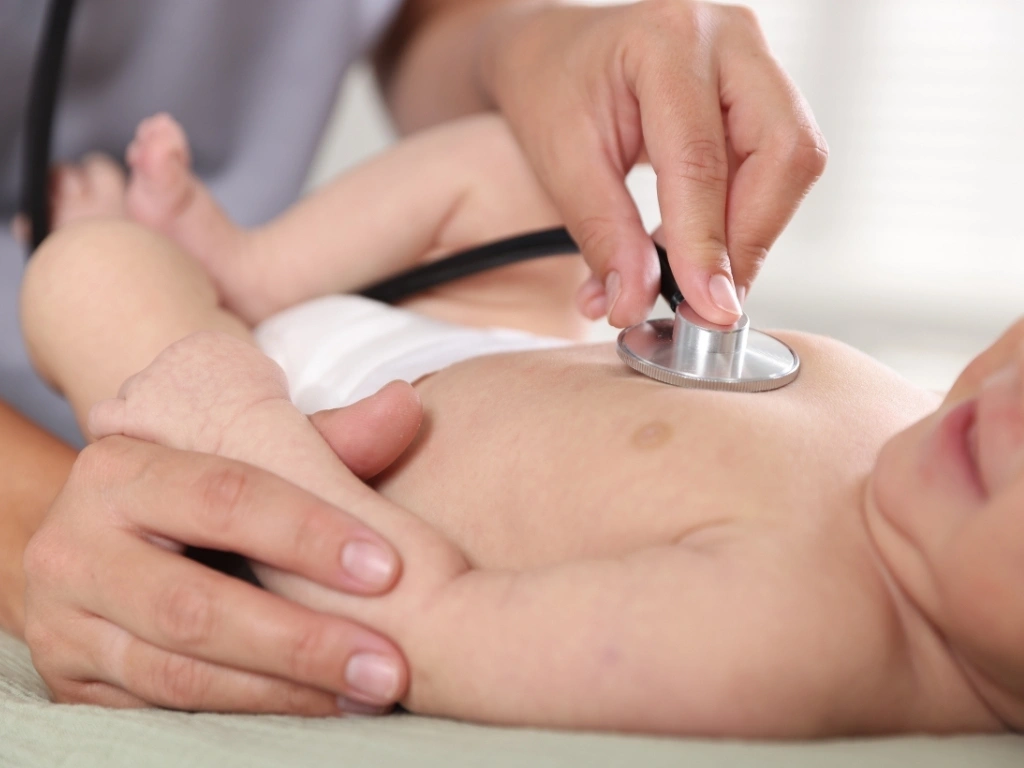
Testing usually begins with a visit to a pediatrician. Expect the doctor to review your child’s symptoms and growth patterns, as well as your family’s medical history. Babies with digestive problems, poor growth, or a family history of celiac disease may be referred to a pediatric gastroenterologist for further evaluation.
tTG-IgA antibody test
The most common first test for celiac disease evaluation is the tissue transglutaminase IgA (tTG-IgA) blood test. This measures antibodies that the immune system produces when someone with celiac disease eats gluten.
Doctors often measure total IgA levels at the same time to ensure the results are accurate. In very young children, additional antibody tests may be recommended.
Genetic testing
Genetic testing looks for the HLA-DQ2 and HLA-DQ8 genes associated with celiac disease. While having these genes doesn’t automatically confirm the condition, a negative result can almost completely rule it out.
Intestinal biopsy
If blood tests strongly suggest celiac disease, doctors may confirm the diagnosis with a small intestinal biopsy. During this procedure, tiny tissue samples from the small intestine are examined under a microscope for damage caused by gluten.
Other gluten-related conditions that may affect babies
When babies react poorly to foods containing wheat or gluten, it doesn’t always mean they have celiac disease. Several different conditions can cause similar symptoms. Understanding these differences is vital when ruling out celiac disease in babies and determining the correct diagnosis and treatment plan.
Wheat allergy in infants
While celiac disease shares some overlaps with wheat allergies, they’re two different conditions. A wheat allergy is a type of food allergy where the immune system overreacts to the intake of wheat proteins, in particular, triggering symptoms like skin rashes or hives, swelling, or digestive symptoms. In rare cases, severe allergic reactions may require urgent medical care.
Wheat allergies often appear in infants between six and 12 months old, when wheat-containing foods are introduced to their diets.
Infant gluten sensitivity
Another condition typically confused with celiac disease is non-celiac gluten sensitivity (NCGS). This condition can cause digestive discomfort and other symptoms after consuming gluten, much like celiac disease. However, it isn’t an autoimmune disease like celiac disease, which means it doesn’t cause the same intestinal damage.
Healthcare providers usually diagnose gluten sensitivity only after celiac disease and wheat allergies have already been ruled out.
With Health Loft, your child can stay healthy as they grow
With timely diagnosis and proper, comprehensive care, babies with celiac disease can grow and develop without complications. Nutritional guidance is critical after diagnosis. Because gluten is found in many everyday foods, families often need support learning how to identify hidden sources of gluten, plan well-balanced meals, and make sure their child receives all the nutrients they need for healthy growth and development.
At Health Loft, our dietitians specializing in celiac disease work closely with you to make this transition easier overall. We guide you through learning all about the gluten-free diet, its value for your child, and how you can adapt it to co-create realistic strategies to ensure your baby’s diet stays nutritionally complete and celiac-safe.
Get in touch with a Health Loft dietitian today to start receiving evidence-based nutrition care that is specifically designed to support your child’s well-being.
This article was reviewed by Haleigh Mann, MS, RDN, LDN. It is intended for informational purposes only and does not replace personalized nutritional advice.